AI Master Degree: AI & New Technologies





Equip Yourself to Build Responsible Solutions with this AI Master
.svg)
Impact Master of Science in AI & New Technologies
Tomorrow University believes technology should serve people and society — not the other way around. That’s why our programs help professionals develop the judgment, responsibility, and leadership needed to apply technology in meaningful ways.
The Impact MSc in AI & New Technologies is an online AI master designed for professionals who want to turn ideas into real-world impact. Instead of focusing only on tools or trends, the program helps you understand where artificial intelligence and emerging technologies create genuine value — and how to implement them responsibly within organizations and industries.
Built on the pillars of artificial intelligence, emerging technologies, and responsible innovation, this AI master combines technical knowledge with ethical awareness and practical application. You’ll learn how to design and implement solutions that are not only innovative, but also trusted, scalable, and sustainable in the long term.
Why Learners Love Us
No Exams, 100% Practical
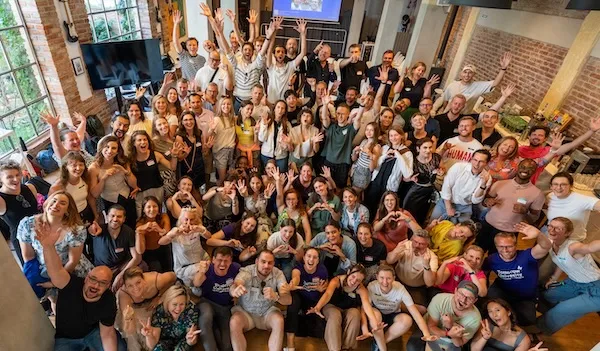
Remote, with Global Community

Personalized Learning
#1 university in Germany for innovative education and impactful careers in 2024

.svg)

.webp)

.webp)
Accessible Learning, Flexible Financing









Impact Stories: Hear from our Changemakers


Meet some of your Professors
Program Director for the Impact MBA
Professor of Sustainability & Entrepreneurship


Program Director for the Impact Master of Science
Professor of Data Science & AI

Professor for Sustainability & Ecology

Program Director for the Bachelor of Science
Professor of AI & Technology
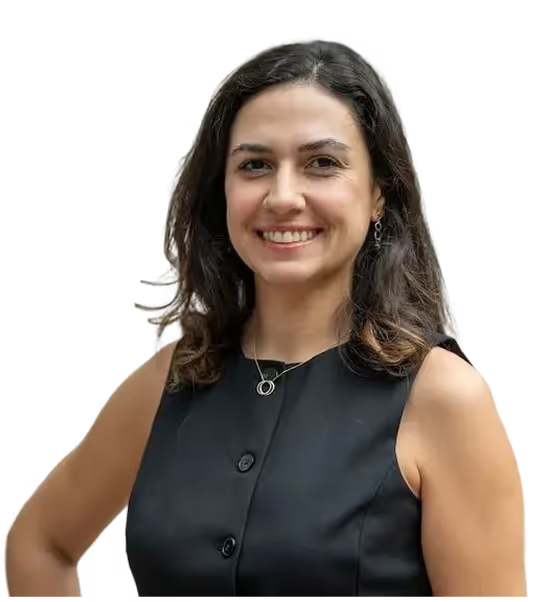
Professor for Innovation & Strategy

Next-Generation Virtual Campus

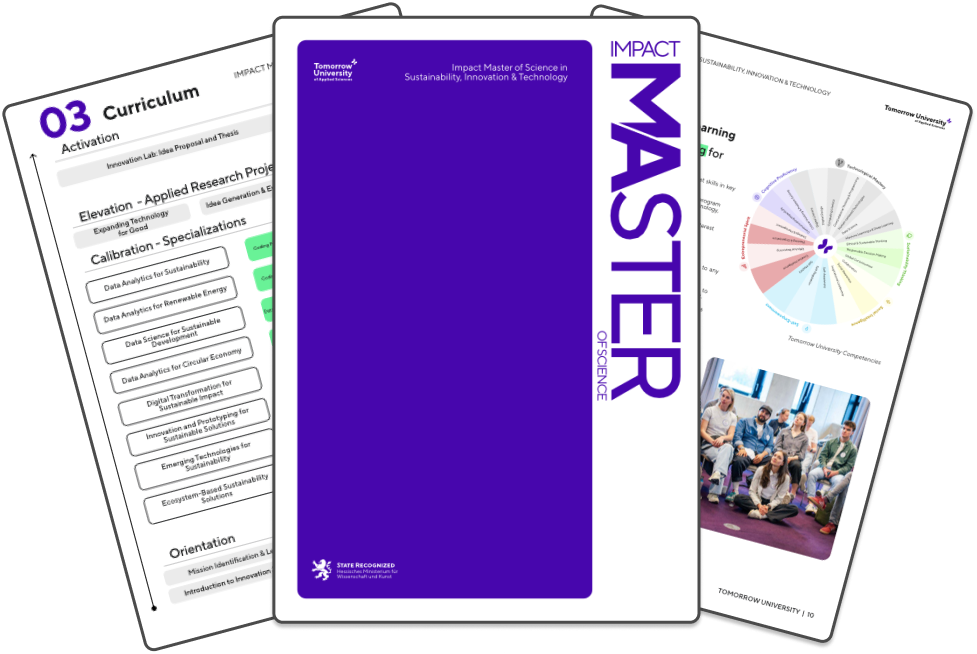
Get the Curriculum
Get Curriculum
Frequently Asked Questions
What is Challenge-Based Learning?
Challenge-Based Learning is a method where you learn by solving real, open-ended problems instead of memorizing theory from lectures. At Tomorrow University it runs across four phases, Orientation, Calibration, Elevation, and Activation, so you build knowledge, apply it to interdisciplinary challenges, and finish with a thesis or applied project. It is 100% online and self-paced.
Is Tomorrow University worth it? An honest review
It depends on your goals, and you deserve a straight answer. Tomorrow University is a state-recognized German university with accredited degrees, a fully online applied learning model, a global Community, and mentoring-based careers support. Those facts are verifiable. For peer opinions, check independent review platforms yourself, and use the questions below to judge whether it fits you.
What is a coding bootcamp and is it worth it?
A coding bootcamp is a short, intensive program that teaches practical programming skills through hands-on projects rather than long lectures. Most run a few weeks to several months, online or in person. It can be worth it if you want job-ready skills fast, though a standalone bootcamp is a certificate, not an accredited degree.
How many ECTS is a master's degree?
In the European system, a master's degree is usually 60 to 120 ECTS credits, most often 90 or 120. The exact number depends on the program and your prior degree. At Tomorrow University, our Master of Arts and Master of Science are 90 or 120 ECTS, and our Impact MBA is 60, 90, or 120 ECTS.
What are the best online universities in Germany you can study in English?
Yes, you can study at an online university in Germany in English. Germany has accredited, state-recognized private online universities offering English-taught degrees, plus public distance-learning options that are mostly German-taught. The best choice depends on accreditation, recognition, format, language, and cost. Tomorrow University is one accredited, English-taught, fully online option.
What is an AI certificate and is it worth it?
An AI certificate is a credential that proves you have learned to work with artificial intelligence. An online AI certificate is worth it when it builds real, applied skills and carries recognized weight rather than just a logo. At Tomorrow University, AI learning earns ECTS, the credit system used across European universities, so it can stack toward a degree.
Can you study while working full-time?
Yes. Tomorrow University programs are 100% online and self-paced, built to fit around a full-time job with no on-campus requirement. You can study a part-time online master's, bachelor's, or MBA while working, learning through Challenge-Based Learning that turns your real work into part of the degree. You choose full-time or part-time pacing.
Is a data science or coding bootcamp worth it?
A data science or coding bootcamp can be worth it if you want practical, job-ready skills fast. The honest answer depends on your goal. A bootcamp builds hands-on skills quickly, while a degree adds an accredited qualification. At Tomorrow University you get both, because a Le Wagon Bootcamp is built into the accredited Joint BSc.
Is Tomorrow University accredited?
Yes. Tomorrow University of Applied Sciences is a state-recognized private university in Germany, under the State of Hesse. Its programs are accredited through the Akkreditierungsrat, the German Accreditation Council, with bachelor's degrees accredited via FIBAA and master's and MBA programs via ACQUIN. The distance-learning format is approved by Germany's ZFU.
What are ECTS credits?
ECTS, the European Credit Transfer and Accumulation System, is the standard way European universities measure study workload. One ECTS credit equals roughly 25 to 30 hours of learning, and a full year of full-time study is 60 credits. At Tomorrow University, a Bachelor's is 180 ECTS and a Master's is 90 or 120 ECTS.
How many ECTS do I need to graduate in total?
According to German higher education law, one needs 300 ECTS in total to graduate with a master’s degree. For example, someone with a 180 ECTS bachelor’s degree needs to complete a 120 ECTS master’s degree in order to reach 300 ECTS overall. In some countries an undergraduate degree is worth the equivalent of 210 or even 240 ECTS. In these cases we offer the option of taking a shorter, 90 ECTS program to reach the overall 300 ECTS.
Can I apply if I don’t have a previous university degree?
No, a previous undergraduate university degree is required to apply. Although applicants without a degree but with vocational training and relevant professional experience may sometimes be eligible for special entrance exams, this does not apply to this program. Therefore, we cannot accept applications without a completed university degree.
What requirements do I need to fulfill to qualify for the Master of Science?
- You need to hold an undergraduate degree of a minimum of 180 ECTS (or equivalent credits) in a subject broadly related to Sustainability, Innovation and/or Technology.
- You need to demonstrate sufficient English language skills (at least level B2 of the European Framework of Reference for Languages).
What is the difference between the 120 ECTS program and the 90 ECTS program?
- The 120 ECTS version is aimed at graduates with a first university degree of 180 ECTS. The 90 ECTS version is intended to give graduates with a previous undergraduate degree with 210 or more ECTS credits the opportunity to complete a shortened version of the Master of Science program.
- The Calibration phase of the 90 ECTS version is shorter so that learners complete only one Impact Certificate, whereas learners in the 120 ECTS version get to choose three Impact Certificates of their choice in the Calibration phase.
Is the Master of Science part-time or/and full-time?
- The 120 ECTS track can be completed in 24 months full-time or 30 months part-time.
- The accelerated 90 ECTS track can be completed in 18 months full-time or 24 months part-time.
Is the Master of Science accredited?
Our Master of Science program is accredited through the Accreditation, Certification, and Quality Assurance Institute (ACQUIN), a reputable non-profit organization association comprising over 150 higher education institutions in Europe, recognizing the rigorous quality standards mandated by Germany’s Official Accreditation Council.
Can you provide me with a visa to study in Germany?
The German Immigration Office requires students to attend in-person classes in Germany to be eligible for a student visa. Since our programs are 100% online and do not require physical attendance, you are not eligible for a German student visa through Tomorrow University.
Is an online degree recognized?
Yes, the degree is accredited. Tomorrow University degrees are accredited German higher-education degrees, awarded under the German Accreditation Council through FIBAA for Bachelor's programs and ACQUIN for Master's and MBA programs. An accredited online degree is formally equivalent to an on-campus one. Recognition follows the accreditation, not the delivery format.
How much of the tuition fee is covered by scholarships?
Making education accessible to everyone is one of our core goals. That’s why we offer scholarships of up to 1,500 EUR, as well as a Regional Price Grant of up to 8,000EUR – depending on where you live. You can learn more in our financial support section or by reaching out to our team.
Frequently Asked Questions
Is the Impact Master in Sustainability, Innovation and Technology accredited?
Our Master of Science program is accredited through the Accreditation, Certification, and Quality Assurance Institute (ACQUIN), a reputable non-profit organization association comprising over 150 higher education institutions in Europe, recognizing the rigorous quality standards mandated by Germany’s Official Accreditation Council.
Is the program part-time or/and full-time?
- The 120 ECTS track can be completed in 24 months full-time or 30 months part-time.
- The accelerated 90 ECTS track can be completed in 18 months full-time or 24 months part-time.
What is the difference between the 120 ECTS program and the 90 ECTS program?
- The 120 ECTS version is aimed at graduates with a first university degree of 180 ECTS.. The 90 ECTS version is intended to give graduates with a previous undergraduate degree with 210 or more ECTS credits the opportunity to complete a shortened version of the Master of Science program.
- The Calibration phase of the 90 ECTS version is shorter so that learners complete only one Impact Certificate, whereas learners in the 120 ECTS version get to choose three Impact Certificates of their choice in the Calibration phase.
What requirements do I need to fulfill to qualify for the program?
You need to hold an undergraduate degree of a minimum of 180 ECTS (or equivalent credits) in a subject broadly related to Sustainability, Innovation and/or Technology.
You need to demonstrate sufficient English language skills (at least level B2 of the European Framework of Reference for Languages).
Can I apply if I don’t have a previous university degree?
No, a previous undergraduate university degree is required to apply. Although applicants without a degree but with vocational training and relevant professional experience may sometimes be eligible for special entrance exams, this does not apply to this program. Therefore, we cannot accept applications without a completed university degree.
How many ECTS do I need to graduate in total?
According to German higher education law, one needs 300 ECTS in total to graduate with a master’s degree. For example, someone with a 180 ECTS bachelor’s degree needs to complete a 120 ECTS master’s degree in order to reach 300 ECTS overall. In some countries an undergraduate degree is worth the equivalent of 210 or even 240 ECTS. In these cases we offer the option of taking a shorter, 90 ECTS program to reach the overall 300 ECTS.