
Master of Science in Data Science & Machine Learning






Equip Yourself to Turn Data Into Real-World Impact
.svg)
Master of Science in Data Science & Machine Learning
Tomorrow University approaches data as a powerful force that must be used consciously and responsibly. Our programs combine technical rigor with ethical awareness to support professionals working with complex, real-world data.
The Impact MSc in Data Science & Machine Learning is designed for professionals who want to go beyond dashboards and basic models. The program equips you to work confidently with data, make informed modeling choices, and translate insights into decisions that matter.
Built on the pillars of data science, machine learning, and responsible data use, the program integrates theory with applied practice. You develop end-to-end capability, from data preparation to model deployment, while maintaining accountability for real-world outcomes.
Why Learners Love Us

No Exams, 100% Practical
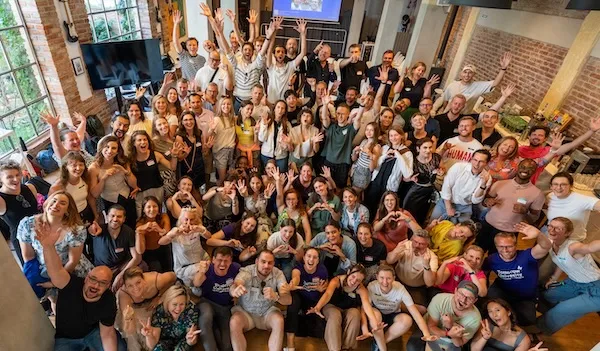
Remote, with Global Community

Personalized Learning
#1 university in Germany for innovative education and impactful careers in 2024

.svg)

.webp)

.webp)
Accessible Learning, Flexible Financing










Impact Stories: Hear from our Changemakers


Meet some of your Professors
Program Director for the Impact MBA
Professor of Sustainability & Entrepreneurship


Program Director for the Impact Master of Science
Professor of Data Science & AI

Professor for Sustainability & Ecology

Program Director for the Bachelor of Science
Professor of AI & Technology
Professor for Innovation & Strategy

Next-Generation Virtual Campus

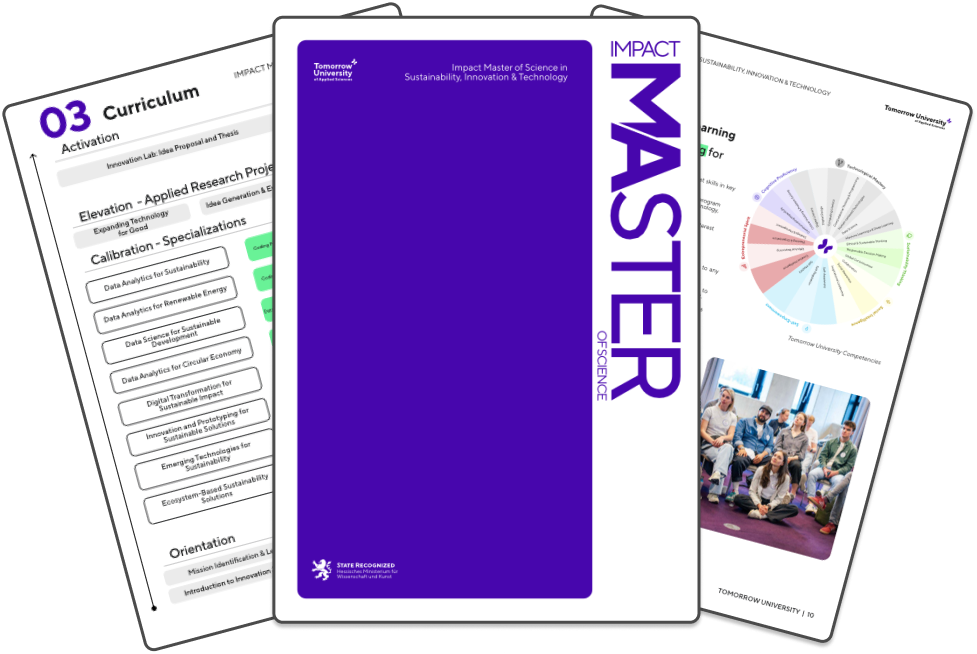
Get the Curriculum
Frequently Asked Questions
How many ECTS do I need to graduate in total?
According to German higher education law, one needs 300 ECTS in total to graduate with a master’s degree. For example, someone with a 180 ECTS bachelor’s degree needs to complete a 120 ECTS master’s degree in order to reach 300 ECTS overall. In some countries an undergraduate degree is worth the equivalent of 210 or even 240 ECTS. In these cases we offer the option of taking a shorter, 90 ECTS program to reach the overall 300 ECTS.
Can I apply if I don’t have a previous university degree?
No, a previous undergraduate university degree is required to apply. Although applicants without a degree but with vocational training and relevant professional experience may sometimes be eligible for special entrance exams, this does not apply to this program. Therefore, we cannot accept applications without a completed university degree.
What requirements do I need to fulfill to qualify for the Master of Science?
- You need to hold an undergraduate degree of a minimum of 180 ECTS (or equivalent credits) in a subject broadly related to Sustainability, Innovation and/or Technology.
- You need to demonstrate sufficient English language skills (at least level B2 of the European Framework of Reference for Languages).
What is the difference between the 120 ECTS program and the 90 ECTS program?
- The 120 ECTS version is aimed at graduates with a first university degree of 180 ECTS. The 90 ECTS version is intended to give graduates with a previous undergraduate degree with 210 or more ECTS credits the opportunity to complete a shortened version of the Master of Science program.
- The Calibration phase of the 90 ECTS version is shorter so that learners complete only one Impact Certificate, whereas learners in the 120 ECTS version get to choose three Impact Certificates of their choice in the Calibration phase.
Is the Master of Science part-time or/and full-time?
- The 120 ECTS track can be completed in 24 months full-time or 30 months part-time.
- The accelerated 90 ECTS track can be completed in 18 months full-time or 24 months part-time.
Is the Master of Science accredited?
Our Master of Science program is accredited through the Accreditation, Certification, and Quality Assurance Institute (ACQUIN), a reputable non-profit organization association comprising over 150 higher education institutions in Europe, recognizing the rigorous quality standards mandated by Germany’s Official Accreditation Council.
Can you provide me with a visa to study in Germany?
The German Immigration Office requires students to attend in-person classes in Germany to be eligible for a student visa. Since our programs are 100% online and do not require physical attendance, you are not eligible for a German student visa through Tomorrow University.
Is an online degree recognized?
Yes. The online format is widely accepted as a legitimate pathway to the same learning and outcomes you’d get in the classroom. At Tomorrow University, we ensure our programs meet the strict standards of higher education, while offering our learners different, often more flexible pathway to the same degrees offered in traditional university settings.
How much of the tuition fee is covered by scholarships?
Making education accessible to everyone is one of our core goals. That’s why we offer scholarships of up to 1,500 EUR, as well as a Regional Price Grant of up to 8,000EUR – depending on where you live. You can learn more in our financial support section or by reaching out to our team.
Frequently Asked Questions
Is the Impact Master in Sustainability, Innovation and Technology accredited?
Our Master of Science program is accredited through the Accreditation, Certification, and Quality Assurance Institute (ACQUIN), a reputable non-profit organization association comprising over 150 higher education institutions in Europe, recognizing the rigorous quality standards mandated by Germany’s Official Accreditation Council.
Is the program part-time or/and full-time?
- The 120 ECTS track can be completed in 24 months full-time or 30 months part-time.
- The accelerated 90 ECTS track can be completed in 18 months full-time or 24 months part-time.
What is the difference between the 120 ECTS program and the 90 ECTS program?
- The 120 ECTS version is aimed at graduates with a first university degree of 180 ECTS.. The 90 ECTS version is intended to give graduates with a previous undergraduate degree with 210 or more ECTS credits the opportunity to complete a shortened version of the Master of Science program.
- The Calibration phase of the 90 ECTS version is shorter so that learners complete only one Impact Certificate, whereas learners in the 120 ECTS version get to choose three Impact Certificates of their choice in the Calibration phase.
What requirements do I need to fulfill to qualify for the program?
You need to hold an undergraduate degree of a minimum of 180 ECTS (or equivalent credits) in a subject broadly related to Sustainability, Innovation and/or Technology.
You need to demonstrate sufficient English language skills (at least level B2 of the European Framework of Reference for Languages).
Can I apply if I don’t have a previous university degree?
No, a previous undergraduate university degree is required to apply. Although applicants without a degree but with vocational training and relevant professional experience may sometimes be eligible for special entrance exams, this does not apply to this program. Therefore, we cannot accept applications without a completed university degree.
How many ECTS do I need to graduate in total?
According to German higher education law, one needs 300 ECTS in total to graduate with a master’s degree. For example, someone with a 180 ECTS bachelor’s degree needs to complete a 120 ECTS master’s degree in order to reach 300 ECTS overall. In some countries an undergraduate degree is worth the equivalent of 210 or even 240 ECTS. In these cases we offer the option of taking a shorter, 90 ECTS program to reach the overall 300 ECTS.