.svg)
.svg)
Master of Arts in Self Leadership & Longevity


Curriculum adapted to your needs
- Previous Undergraduate University Degree is required
- Prior ECTS required: 210 ECTS minimum
- For those with prior academic or professional experience, a shorter path to graduation in just 1.5 years
- Previous Undergraduate University Degree is required
- ECTS required: 180 ECTS minimum
- A complete study experience designed for learners starting fresh, covering the full curriculum over two years
- Previous Undergraduate University Degree is required
- Prior ECTS required: 210 ECTS minimum
- For those with prior academic or professional experience, a shorter path to graduation in just 1.5 years
- Previous Undergraduate University Degree is required
- ECTS required: 180 ECTS minimum
- A complete study experience designed for learners starting fresh, covering the full curriculum over two years
- Prior ECTS required: 210 ECTS minimum
- Work experience: min 5 years, ideally with leadership experience
- Ideal for: Senior Professionals with a strong academic background
- Why choose this: fast-track your MBA with executive experience
- Prior ECTS required: 180 ECTS minimum
- Work experience: min 2 years
- Ideal for: Professionals with a Bachelor’s degree and solid work experience
- Why choose this: most flexible option, ideal for mid-career professionals
- Prior ECTS required: 180 ECTS minimum or vocational training + training experience
- Work experience: min 2 years
- Ideal for: early-career professionals or applicants with vocational training
- Why choose this: ideal if you plan to pursue a doctorate or have a non-traditional academic background
Explore Your Learning-Journey

Orientation Phase
Orientation Modules

Heading
Heading
Heading
Heading
Heading
Heading
Heading

Calibration Phase
Impact Certificates
Inner Development Goals

Being: Self-Awareness & Self Management
What You'll Learn
Who Is It For

Applied Cognitive Strategies for Emotional Intelligence
What You'll Learn
Who Is It For

Relating & Collaborating: Caring for the Outer World
What You'll Learn
Who Is It For
Regenerative Health for Longevity and a Sustainable Future

Sustainable Health and Nutrition
What You'll Learn
Who Is It For

Rest, Sleep & Regeneration
What You'll Learn
Who Is It For

Physical Activity, Movement & Embodied Wellness
What You'll Learn
Who Is It For
Understanding the Mind

The Development of Self: Perception, Cognition, and Consciousness
What You'll Learn
Who Is It For
Human Behavior and Cognitive Processes
What You'll Learn
Who Is It For

Human Motivation
What You'll Learn
Who Is It For
AI for Everyone

Blending AI into Business & Life
Video Intro
What You'll Learn
Who Is It For

AI Trends and Possibilities
Video Intro
What You'll Learn
Who Is It For

Challenges and Ethics with AI Conscience
Video Intro
What You'll Learn
Who Is It For
Behavioural Change

Behavioral Economics
Video Intro
What You'll Learn
Who Is It For

Sustainable Design
Video Intro
What You'll Learn
Who Is It For

Applied Design for Behavioral Change
Video Intro
What You'll Learn
Who Is It For
Human Centered Tech-Design

Human Centered AI
What You'll Learn
Who Is It For
Human-Tech Interaction and Human-AI Collaboration
What You'll Learn
Who Is It For

Applying Psychological Science to Tech and AI Products
What You'll Learn
Who Is It For
Human Resources, Business Coaching, Career Development

Business Coaching
What You'll Learn
Who Is It For

Career Development
What You'll Learn
Who Is It For

Learning & Development
What You'll Learn
Who Is It For
Leading the Change

Risk Taking & Decision Making
Video Intro
What You'll Learn
Who Is It For
Challenge Owner
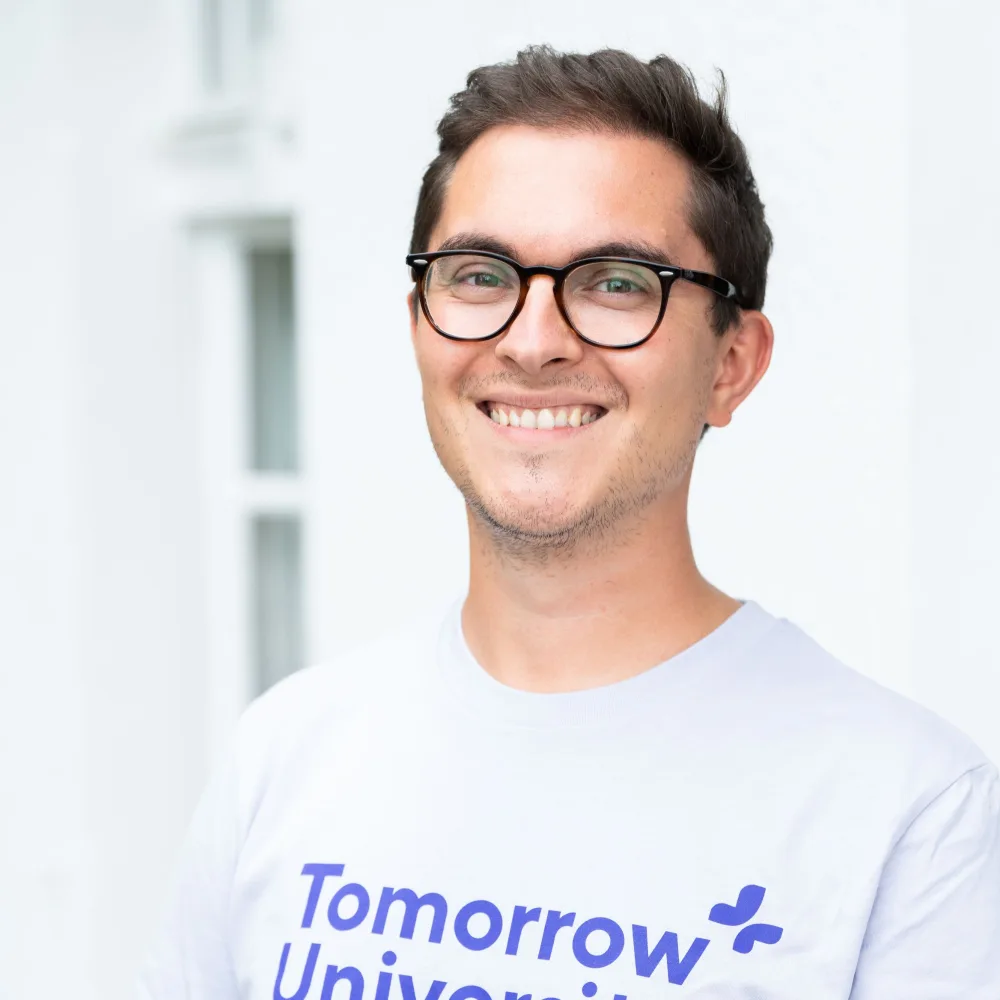
Gabi Lipan
Program Director MA in Applied Psychology

Negotiations & Conflict Solving
Video Intro
What You'll Learn
Who Is It For
Challenge Owner
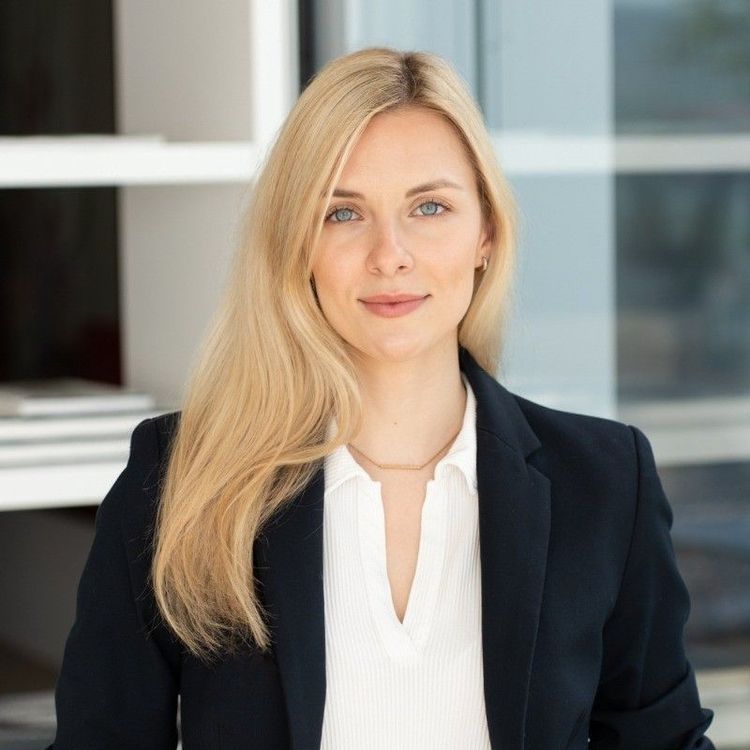
Noel Schoenbrunn
Executive Director at Schranner Consulting AG, Schranner Negotiation Institute

Effective Communication & Storytelling
Video Intro
What You'll Learn
Who Is It For
Challenge Owner
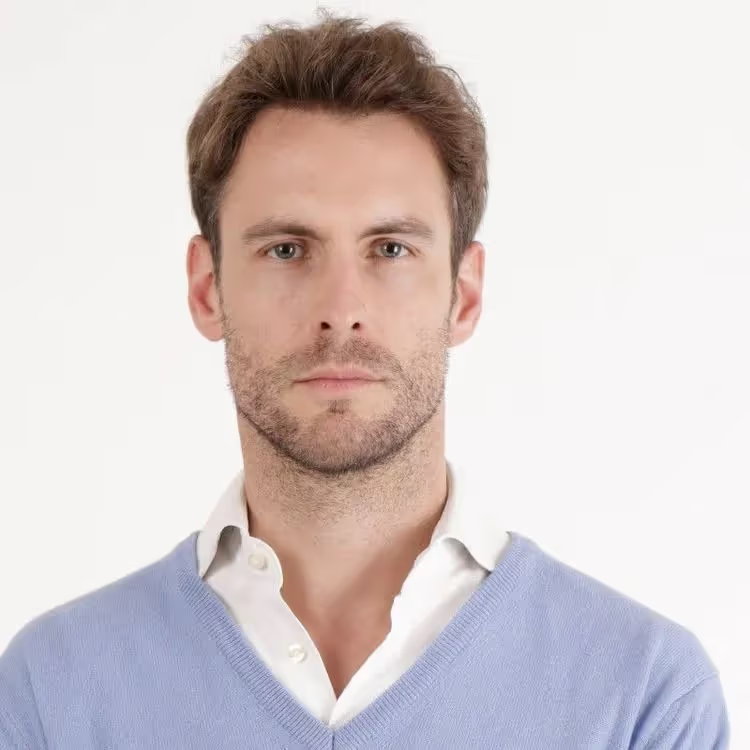
Constantin Simon
Self employed Entrepreneur, Canredo
Organizational Culture & Change Management

Psychology in the Workplace: Psychological Safety
What You'll Learn
Who Is It For

Culture Design
Video Intro
What You'll Learn
Who Is It For
Challenge Owner
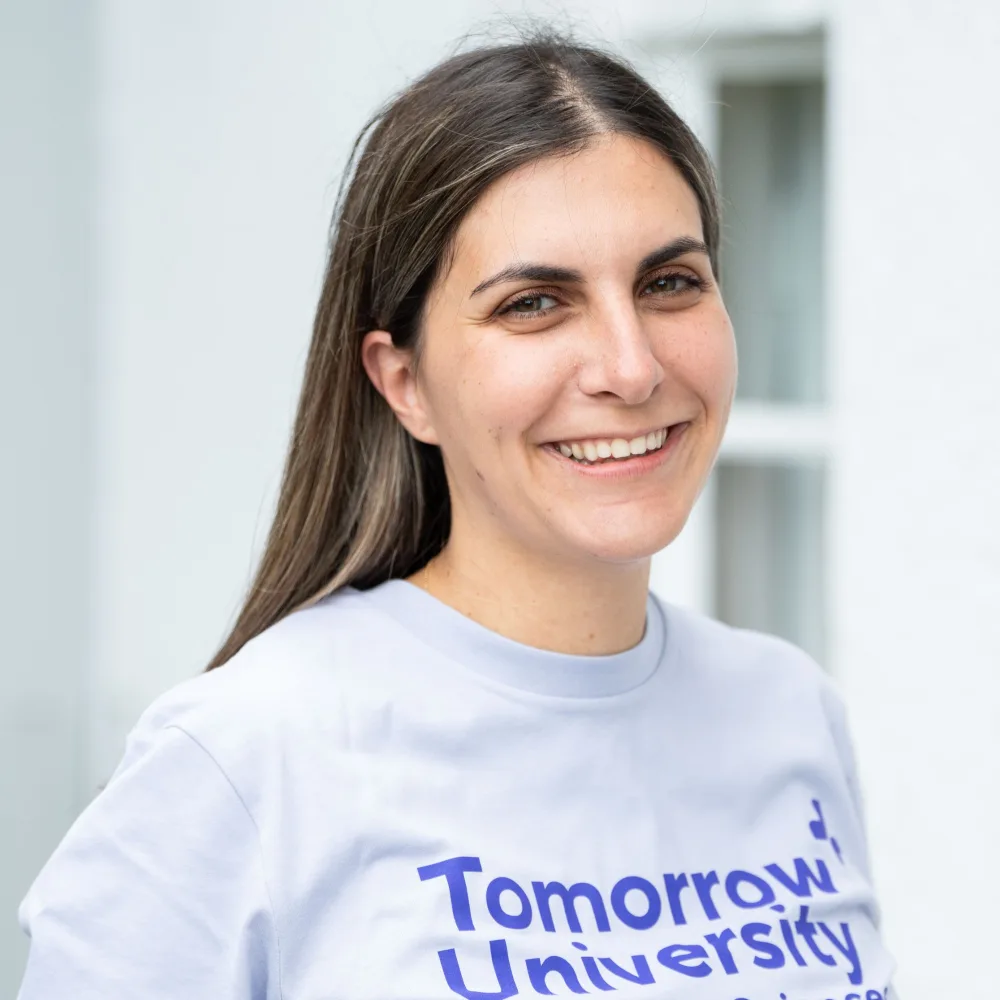
Prof. Dr. Nellie Marangou
VP of Academic Affairs

Change Management
What You'll Learn
Who Is It For
Positive Psychology

Introduction to Positive Psychology
What You'll Learn
Who Is It For

Positive Coaching and Leadership
What You'll Learn
Who Is It For

Character Development
What You'll Learn
Who Is It For
Sustainable Innovation Management

Innovation Methods
What You'll Learn
Who Is It For

People & Process Innovation
What You'll Learn
Who Is It For

Leading Innovation
What You'll Learn
Who Is It For
Think and Act Like a Leader

A Leader’s Mindset
Video Intro
What You'll Learn
Who Is It For
Challenge Owner
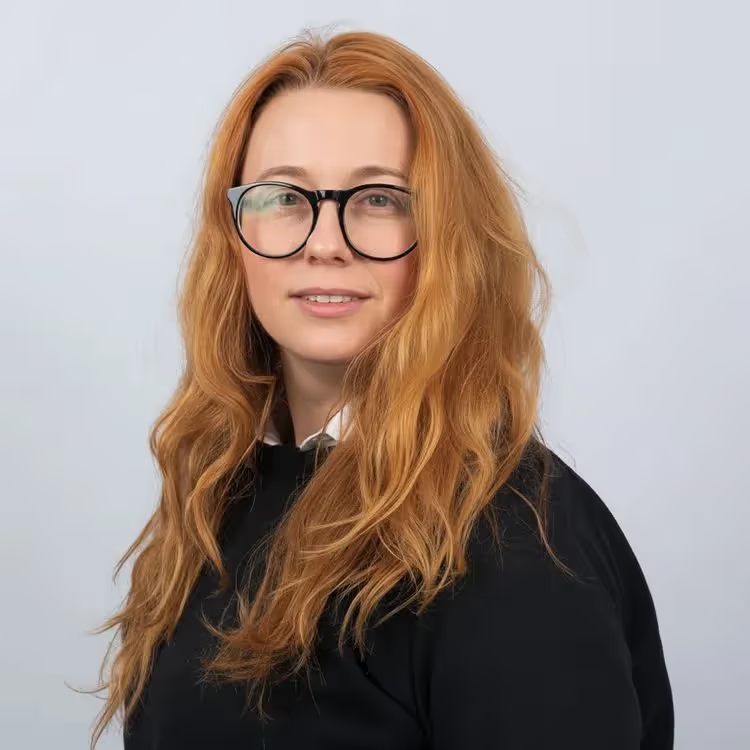
Alisa Reznik
Executive leadership coach, Leadify

Resilience Training
Video Intro
What You'll Learn
Who Is It For
Challenge Owner
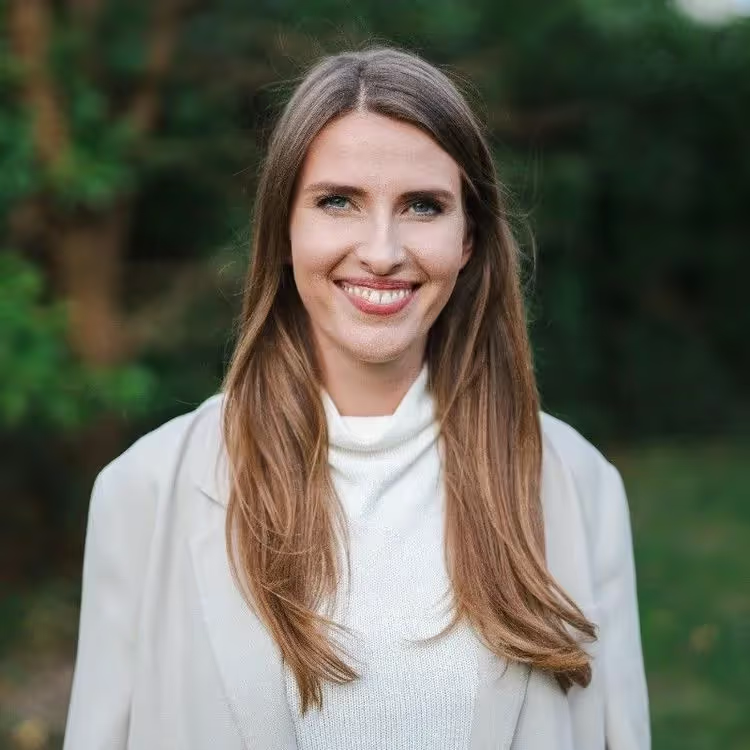
Anna Maria Schaupp
Expert of Organizational behavior, Framechangers | Begleiterinnen für Neue Führung

Personal Branding for Professionals
Video Intro
What You'll Learn
Who Is It For
Challenge Owner

Anja Pauli
Owner, Sun Shine Social

Elevation Phase
Real-World Challenges
Heading
Heading
Heading
Heading
Heading

Activation Phase
Thesis Project
Heading
Heading

Combine Industry Expertise with Academic Knowledge
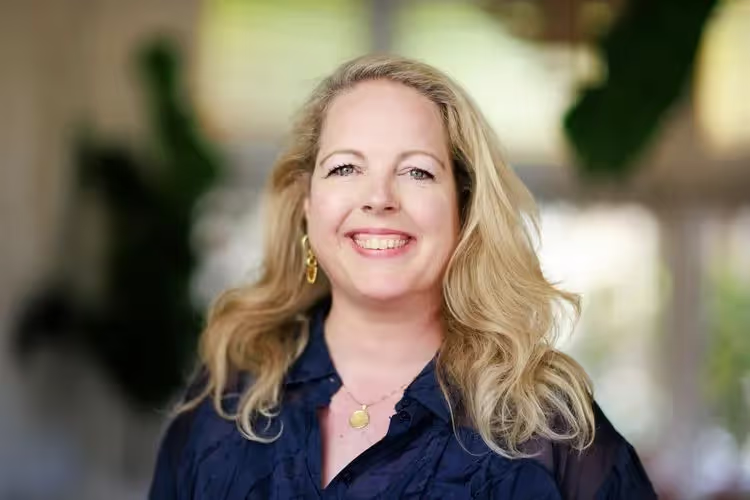
Noor van Boven
Industry Expertise
Noor van Boven is a seasoned HR and organizational leader known for her strategic roles as Chief People Officer at N26 and VP People at SoundCloud, where she has helped scale teams and strengthen organizational culture in fast‑growing tech companies. She is also a co‑founder of Invested, an advisory and angel investment initiative focused on the future of work and tech innovation.
Academic & Industry Expertise
Our dedicated professors are appointed in compliance with the Hessian Higher Education Act, adhering to the strict requirements set for all state universities in Germany.
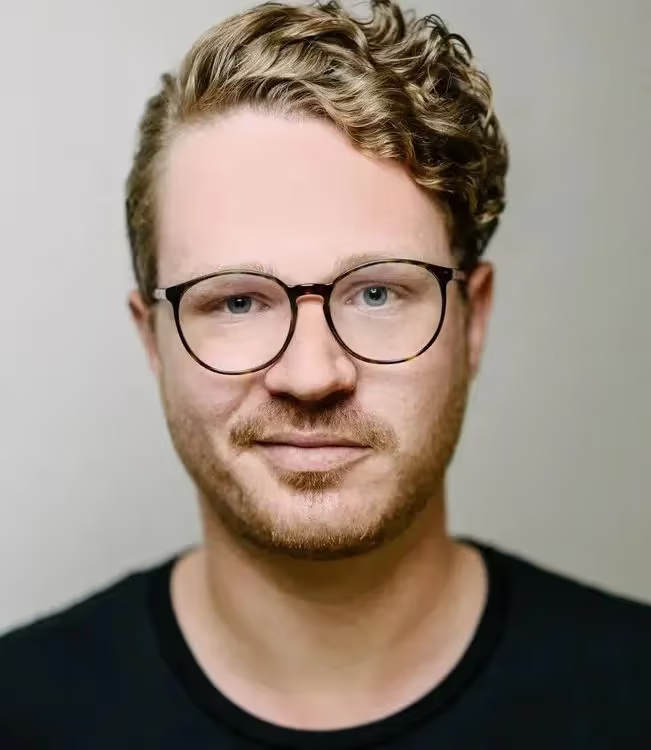
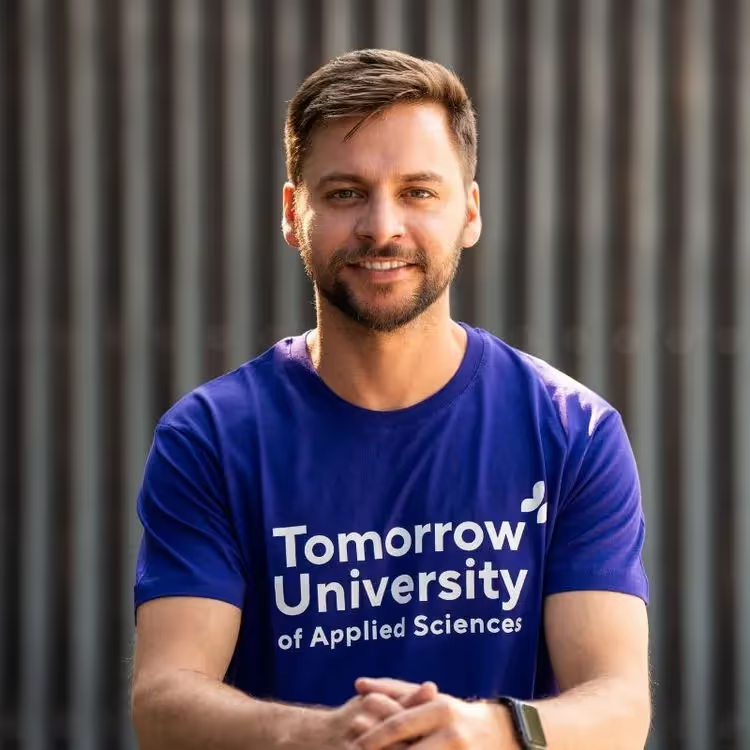
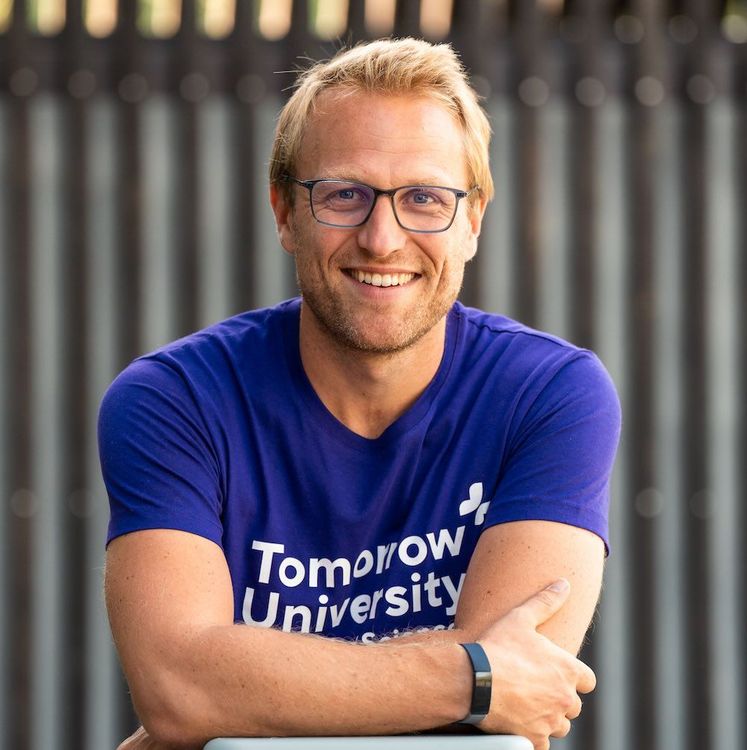
Prof. Dr. Jonathan Costa
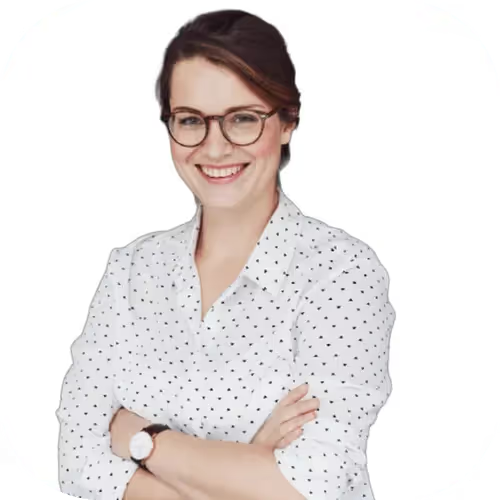
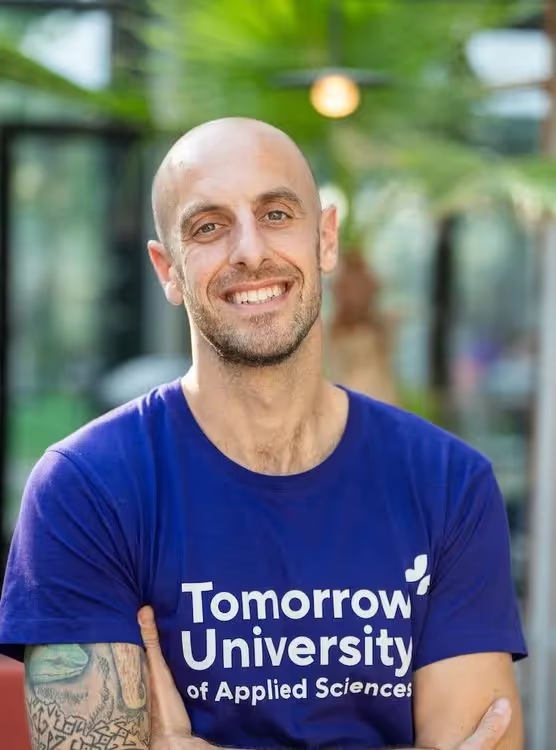
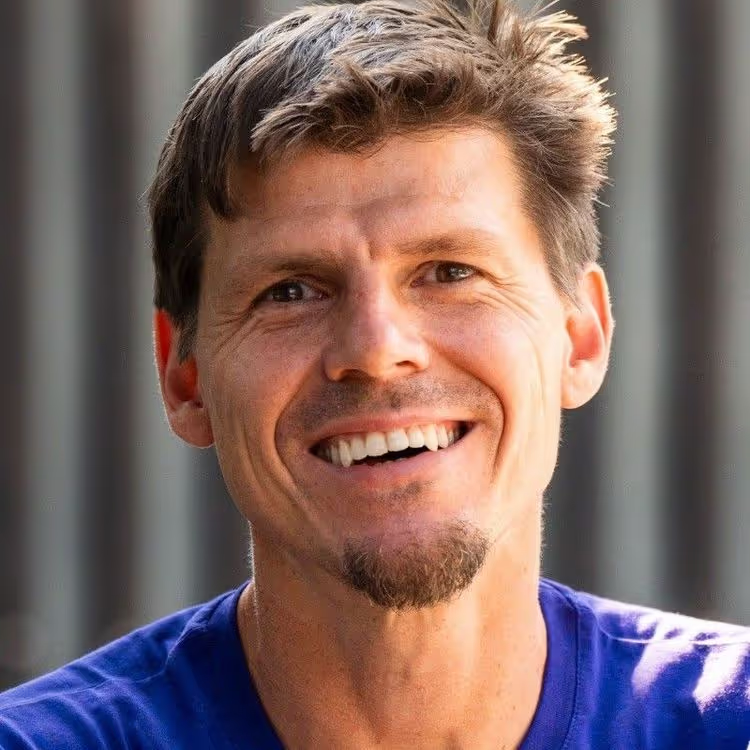
Prof. Dr. Sami Asad
70% of Graduates Advanced toward their Mission
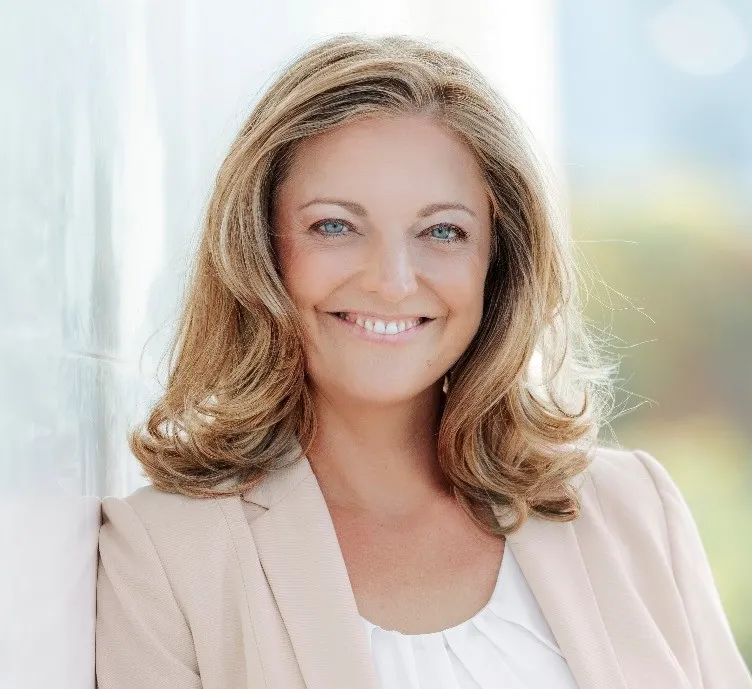
Female Empowerment
Evelyn Fischer
Founder of FINORIA
I had a successful but somewhat unfulfilling career in tech that no longer fit where I saw my career going. At Tomorrow University, I gained both the expertise needed and the direction required to found my own company, FINORIA. I built my company to close the gender investment and wealth gap.
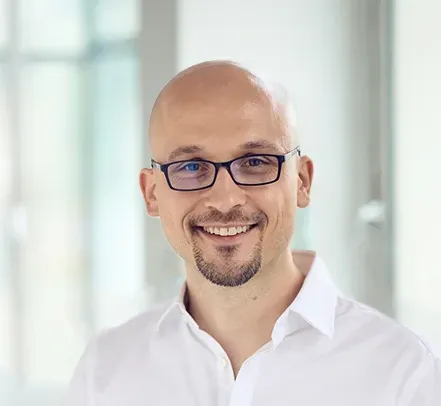
Universally Connected Humanity
Christian Kaya
Director Executive Search & Consulting at Riverstate
During my Impact MBA at Tomorrow University, I developed my personal mission statement: to grow awareness of a universally connected humanity. Since then, I've integrated transformation consulting into my executive search work and launched TRAGWEITE, a podcast on leadership, transformation, and sustainability in construction and infrastructure. The MBA wasn't a conclusion — it was a beginning.
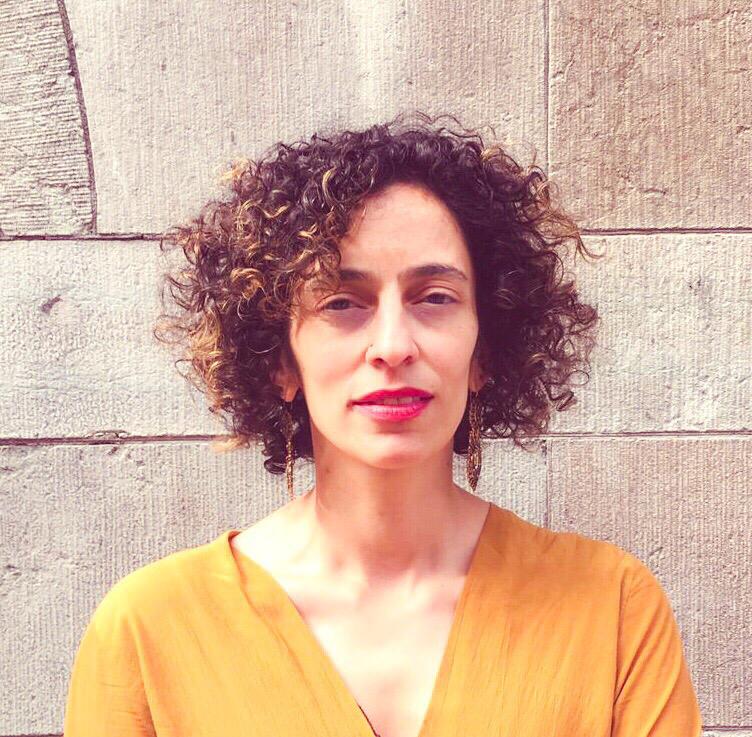
Sustainability & Fairness
Vânia Mendes
Sr. Implementation Manager at Position Green
Sustainability and fairness were always my why, an underlying purpose for my contribution to society. What I lacked was the how. The ability to take ideas and advance them in an organization to the point that they become real, and have real impact. Today, I work at the intersection of ESG, technology, and project leadership, helping organizations close the gap between what they believe and what they actually build. It’s exactly where I wanted to be.
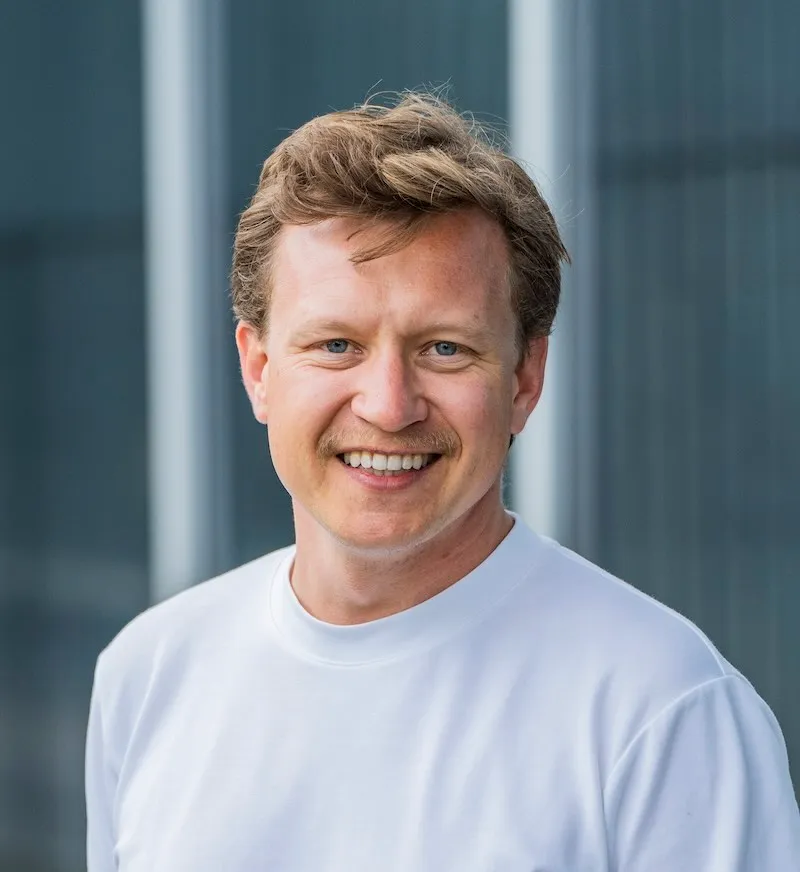
Digital Product Development
Marius
Product Management & Development
I’ve always believed that the best digital products don’t just work, but they feel inevitable. You use them once and wonder how you managed without them. A product loved by people is one they reach for instinctively, before they have consciously decided to use it. This standard shapes every design decision. As a Product Manager and Developer, I have always been drawn to the how of building software.
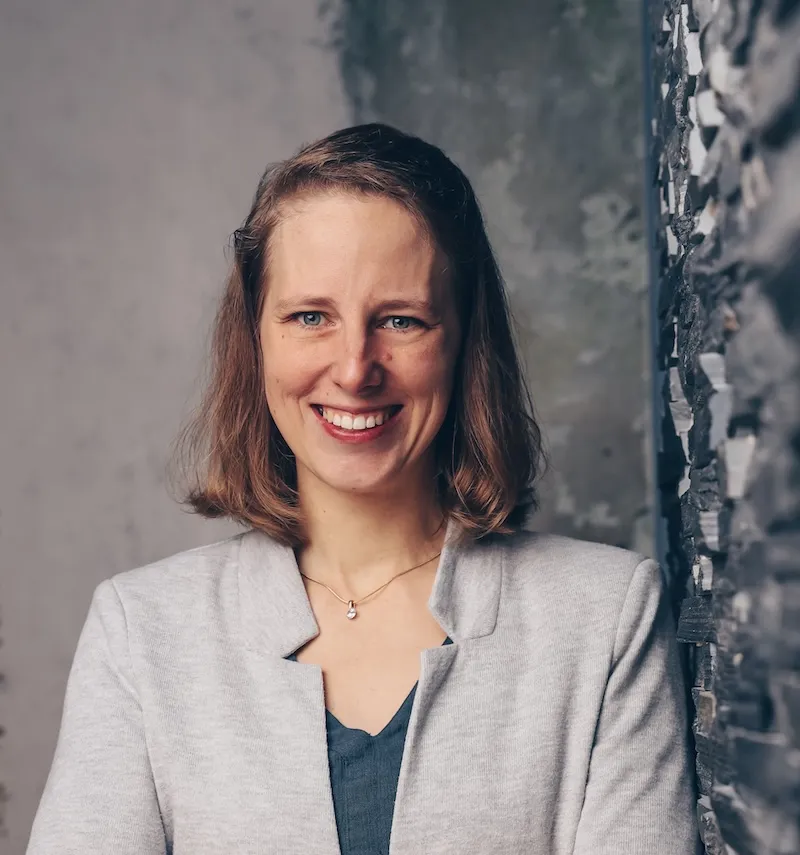
Finding Purpose & Impact
Katharina
Process Safety Engineer at Evonik
My mission is pragmatic transformation: helping people move from understanding a problem to actually doing something about it. Most sustainability conversations stall between insight and action, and that’s exactly where my work comes in. The MBA gave me the clarity I needed and the community that encouraged me to push forward. I now live this through mentoring, collaboration across disciplines and in pushing others to keep learning with the goal of finding their purpose and impact.
77% of Graduates Progressed their Careers
Different Paths. Shared Progress.
Students shape their careers while they study. Some advance in their field, some pivot to new paths, and others build companies of their own. What they share is a clear sense of progression.

Roberta Scrofani
Entrepreneur & Advisor in AI Transformation
After 15 years in adtech, I studied at Tomorrow University and became an independent AI advisor, now helping companies navigate AI transformation.
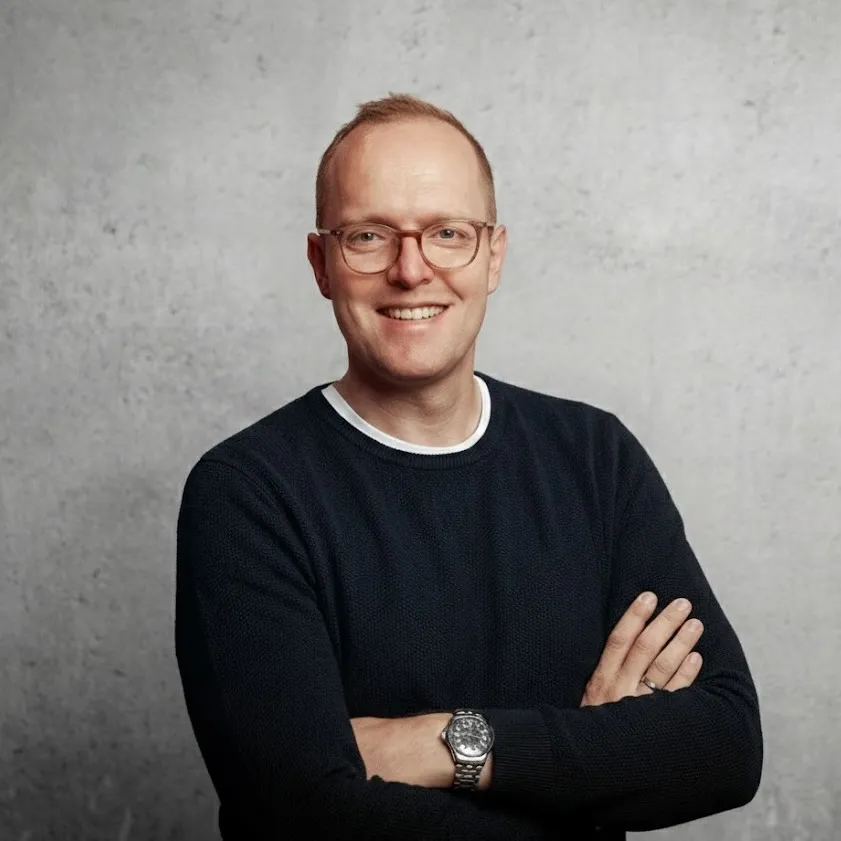
Christoph Pemp
Director of Advisory & Client Solutions
After studying at Tomorrow University, I moved into a new role at one of the Group's ventures in 2026, where I now apply the AI knowledge the programme gave me.

Victoria van Oppen
Organizational Development Manager
As an engineer passionate about transformation, the Impact MBA gave me the tools to pivot into organizational development, helping companies build high-trust, sustainable workplaces.
Explore Other Programs
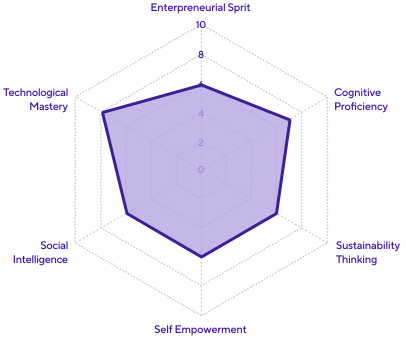
Tomorrow University’s five Master of Science programs are built on cutting-edge technologies like AI and data science. Customize your learning experience around topics such as sustainability, innovation, technology, entrepreneurship and many more.
Our Five MSc Programs

Explore Other Programs
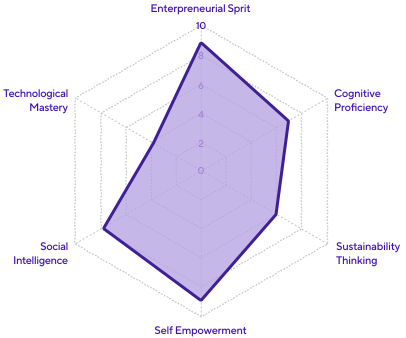
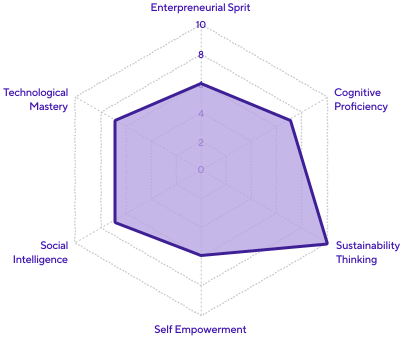
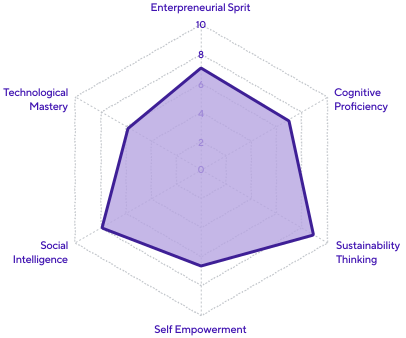
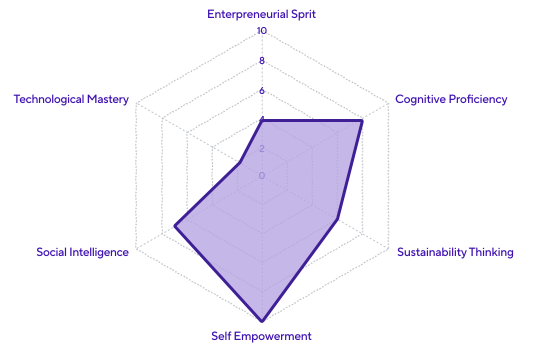
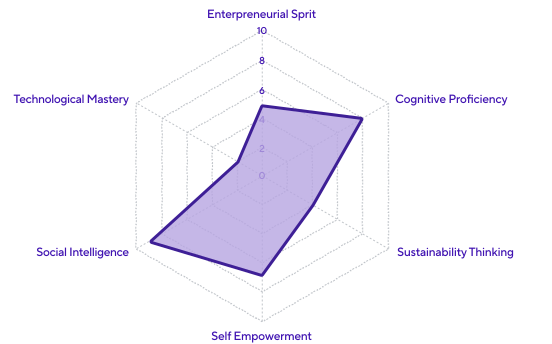
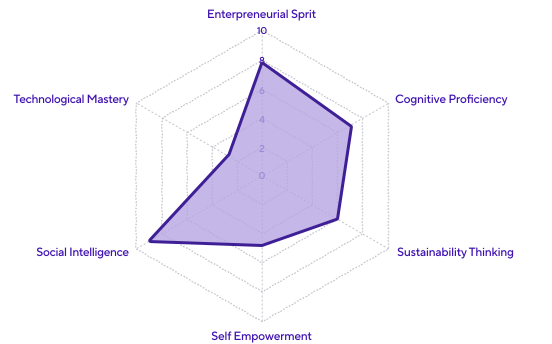
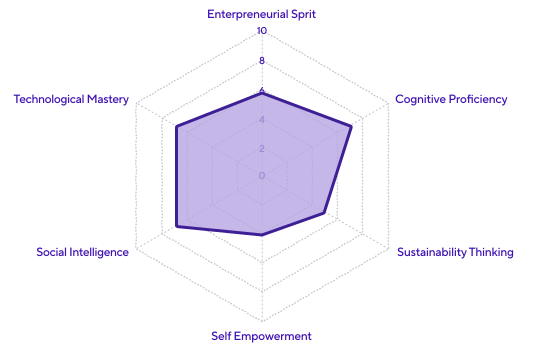
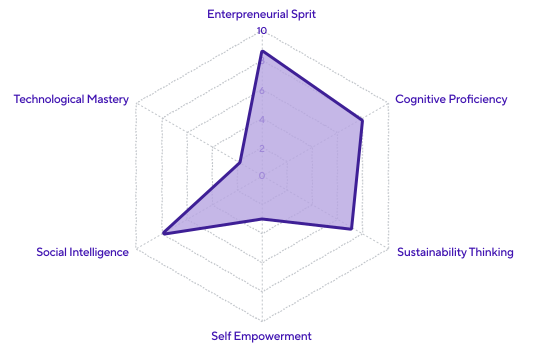
Tomorrow University’s five Master in Applied Psychology programs are built on the conviction that sustainable progress starts with self-leadership and extends outward to teams, organizations, and society. Each program focuses on a distinct layer of human development.
Our Five MA Programs
Explore Other Programs
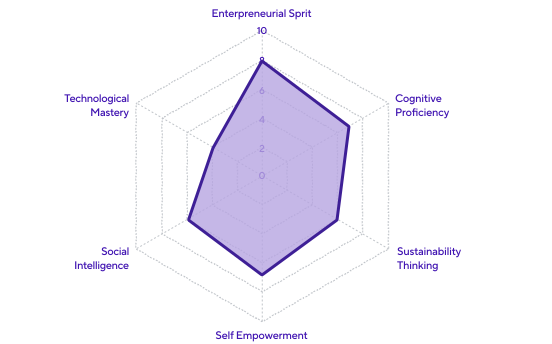
Tomorrow University’s five Bachelor of Arts programs are built on cutting-edge technologies like AI and data science. Build products, launch startups, or start movements. Tailor your learning journey around topics such as entrepreneurship, innovation, business management and many more.
Our Five Bachelor of Arts Programs
Frequently Asked Questions
How much of the tuition fee is covered by scholarships?
Making education accessible to everyone is one of our core goals. That’s why we offer scholarships of up to 1,500 EUR, as well as a Regional Price Grant of up to 8,000EUR – depending on where you live. You can learn more in our financial support section or by reaching out to our team.
Can you provide me with a visa to study in Germany?
The German Immigration Office requires students to attend in-person classes in Germany to be eligible for a student visa. Since our programs are 100% online and do not require physical attendance, you are not eligible for a German student visa through Tomorrow University.
Can I apply if I don’t have a previous university degree?
No, a previous undergraduate university degree is required to apply. Although applicants without a degree but with vocational training and relevant professional experience may sometimes be eligible for special entrance exams, this does not apply to this program. Therefore, we cannot accept applications without a completed university degree.
How many ECTS do I need to graduate in total?
According to German higher education law, one needs 300 ECTS in total to graduate with a master’s degree. For example, someone with a 180 ECTS bachelor’s degree needs to complete a 120 ECTS master’s degree in order to reach 300 ECTS overall. In some countries an undergraduate degree is worth the equivalent of 210 or even 240 ECTS. In these cases we offer the option of taking a shorter, 90 ECTS program to reach the overall 300 ECTS.
Is the Master of Arts part-time or/and full-time?
- The 120 ECTS track can be completed in 24 months full-time or 30 months part-time.
- The accelerated 90 ECTS track can be completed in 18 months full-time or 24 months part-time.
What is the difference between the 120 ECTS and the 90 ECTS program?
- The 120 ECTS version is aimed at graduates with a first university degree of 180 ECTS. The 90 ECTS version is intended to give graduates with a previous undergraduate degree with 210 or more ECTS credits the opportunity to complete a shortened version of the Master of Arts program.
- The Calibration phase of the 90 ECTS version is shorter so that learners complete only one Impact Certificate, whereas learners in the 120 ECTS version get to choose three Impact Certificates of their choice in the Calibration phase.
What requirements do I need to fulfill to qualify for the Master of Arts?
- You need to hold an undergraduate degree of a minimum of 180 ECTS (or equivalent credits) in a subject broadly related to Psychology, and/or Business.
- You need to demonstrate sufficient English language skills (at least level B2 of the European Framework of Reference for Languages).
- You need to proof of at least one year of relevant professional experience.
Does this degree qualify me to work as a Psychological Psychotherapist?
- This degree does not qualify graduates to use the protected professional title “Psychological Psychotherapist” (“Psychologische/r Psychotherapeut/in”) under §1 of the German Psychotherapists Act (PsychThG).
- It also does not entitle graduates to practice psychotherapy or to commence psychotherapeutic professional training or work in accordance with §§11 and 12(1) of the StakV.
What are ECTS credits?
ECTS, the European Credit Transfer and Accumulation System, is the standard way European universities measure study workload. One ECTS credit equals roughly 25 to 30 hours of learning, and a full year of full-time study is 60 credits. At Tomorrow University, a Bachelor's is 180 ECTS and a Master's is 90 or 120 ECTS.
MBA or master's in business psychology: which fits you?
An MBA is a management degree; a master's in business psychology makes psychology the core discipline. Tomorrow University offers both paths: our MA in Applied Psychology (90 or 120 ECTS) for psychology-first learners, and our Impact MBA with the specialization Conscious Leadership & Organizational Development (60, 90, or 120 ECTS) for business-first learners. Both are ACQUIN-accredited.
Is Tomorrow University accredited?
Yes. Tomorrow University of Applied Sciences is a state-recognized private university in Germany, under the State of Hesse. Its programs are accredited through the Akkreditierungsrat, the German Accreditation Council, with bachelor's degrees accredited via FIBAA and master's and MBA programs via ACQUIN. The distance-learning format is approved by Germany's ZFU.
Does the MA in Applied Psychology let you become a Psychological Psychotherapist (Approbation)?
No. Our MA in Applied Psychology is not a clinical degree, so it does not lead to Approbation. As the program pages state: "This degree does not qualify graduates to use the protected professional title 'Psychological Psychotherapist' ('Psychologische/r Psychotherapeut/in') under §1 of the German Psychotherapists Act (PsychThG)." It prepares you for applied, organizational, and coaching roles instead.
Can you study while working full-time?
Yes. Tomorrow University programs are 100% online and self-paced, built to fit around a full-time job with no on-campus requirement. You can study a part-time online master's, bachelor's, or MBA while working, learning through Challenge-Based Learning that turns your real work into part of the degree. You choose full-time or part-time pacing.
Can you study psychology online?
Yes. You can study applied psychology online through our Master of Arts in Applied Psychology, an accredited German degree you complete 100% online while you keep working. You choose from five specializations, from coaching to organizational psychology, and finish with 90 or 120 ECTS Credits. It is an applied, workplace-focused degree, not a clinical psychotherapy path.
What are the best online universities in Germany you can study in English?
Yes, you can study at an online university in Germany in English. Germany has accredited, state-recognized private online universities offering English-taught degrees, plus public distance-learning options that are mostly German-taught. The best choice depends on accreditation, recognition, format, language, and cost. Tomorrow University is one accredited, English-taught, fully online option.
How many ECTS is a master's degree?
In the European system, a master's degree is usually 60 to 120 ECTS credits, most often 90 or 120. The exact number depends on the program and your prior degree. At Tomorrow University, our Master of Arts and Master of Science are 90 or 120 ECTS, and our Impact MBA is 60, 90, or 120 ECTS.
Is Tomorrow University worth it? An honest review
It depends on your goals, and you deserve a straight answer. Tomorrow University is a state-recognized German university with accredited degrees, a fully online applied learning model, a global Community, and mentoring-based careers support. Those facts are verifiable. For peer opinions, check independent review platforms yourself, and use the questions below to judge whether it fits you.
What is Challenge-Based Learning?
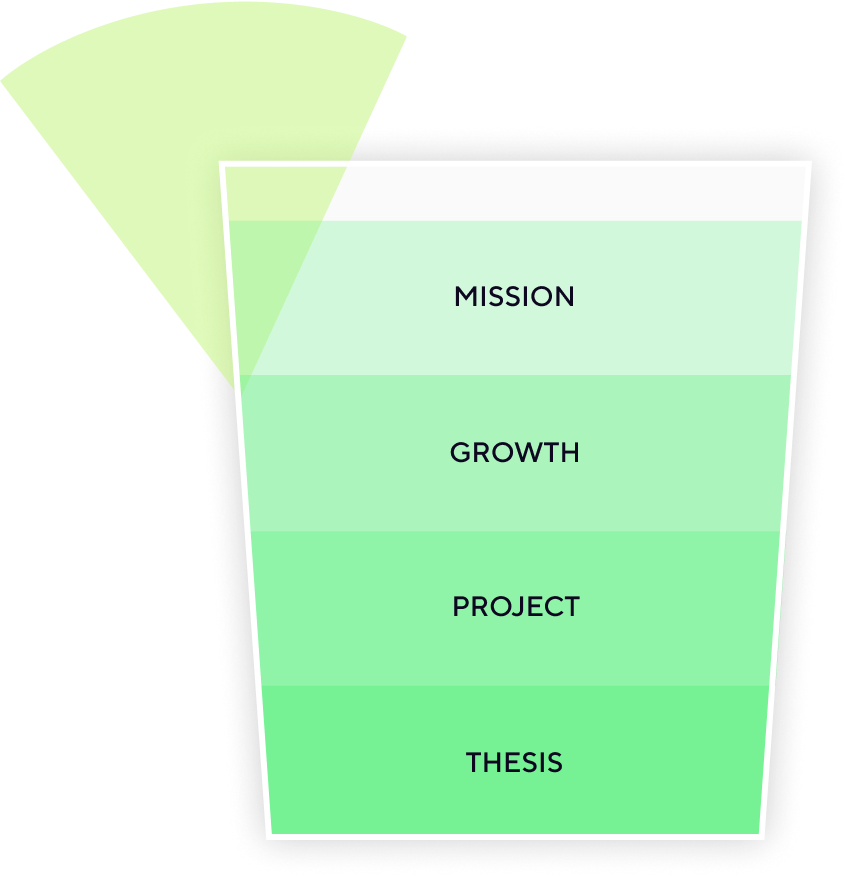
Challenge-Based Learning is a method where you learn by solving real, open-ended problems instead of memorizing theory from lectures. At Tomorrow University it runs across four phases, Orientation, Calibration, Elevation, and Activation, so you build knowledge, apply it to interdisciplinary challenges, and finish with a thesis or applied project. It is 100% online and self-paced.
What is a master in business psychology (Wirtschaftspsychologie)?
A master in business psychology (in German, Wirtschaftspsychologie) applies psychology to the world of work: motivation, teams, leadership, and organizational change. Tomorrow University does not offer a degree by that exact name. The closest applied equivalent is our MA in Applied Psychology with the specialization Organizational Psychology and New Work, an accredited German degree you study online.
Is the Master in Applied Psychology accredited?
Our Master of Arts program is accredited through the Accreditation, Certification, and Quality Assurance Institute (ACQUIN), a reputable non-profit organization association comprising over 150 higher education institutions in Europe, recognizing the rigorous quality standards mandated by Germany’s Official Accreditation Council.
Is an online degree recognized?
Yes, the degree is accredited. Tomorrow University degrees are accredited German higher-education degrees, awarded under the German Accreditation Council through FIBAA for Bachelor's programs and ACQUIN for Master's and MBA programs. An accredited online degree is formally equivalent to an on-campus one. Recognition follows the accreditation, not the delivery format.