.svg)
.svg)
Prof. Dr. Sami Asad
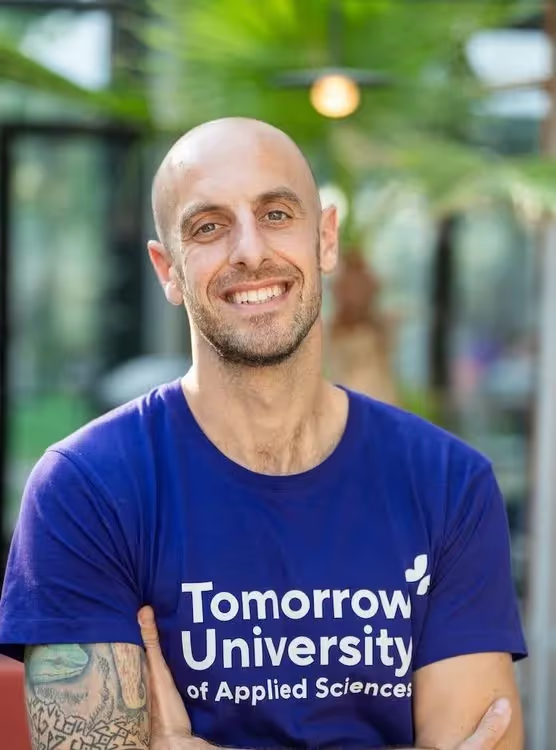
Biography

Research Profile
Papers
Tan, W.C., Vitalis, V.,Siku, J., Rödder, D., Rödel, M. O., and Asad, S. (Submitted) High freshwater turtle occupancy in a sustainably managed tropical forest. Journal of Wildlife Management.
Asad, S., Vitalis, V., Guharajan, R., Abrams, J.F., Lagan, P., Kissing, J., Sikui, J., Wilting, A. and Rödel, M.O. 2022. Variable species but similar amphibian community responses across habitats following reduced impact logging. Global Ecology and Conservation, 35: e02061.
Asad, S., Ng, S.T., Sikui, J. and Rödel, M.O. 2022. Variable detectability and El-Nino associations with riparian snakes in Sabah, Malaysian Borneo. Journal of Tropical Ecology, 38(1): 25-30.
Asad, S., Sikui, J., Binjamin, B. and Rödel, M.O. 2021. Natural history of three freshwater turtle species within two logging reserves in Sabah, Malaysian Borneo. Salamandra, 57(2): 251-262.
Asad, S., Abrams, J.F., Guharajan, R., Lagan, P., Kissing, J., Sikui, J., Wilting, A. and Rödel, M.O. 2021. Amphibian responses to conventional and reduced impact logging. Forest Ecology and Management, 484: p.118949.
Asad, S., Abrams, J.F., Guharajan, R., Sikui, J., Wilting, A. and Rödel, M.O. 2020. Stream amphibian detectability and habitat associations in a reduced impact logging concession in Malaysian Borneo. Journal of Herpetology, 54(4): 385-392.
Mathai, J., Sollman, R., Meredith, M.E., Belant, J.L., Niedballa, J., Buckingham, L., Wong, S.T., Asad, S. and Wilting, A. 2017. Fine-scale distributions of carnivores in a logging concession in Sarawak, Malaysian Borneo. Mammalian Biology-Zeitschrift für Säugetierkunde, 86: 56-65.
Professional Community Services
Peer-reviewed Conference Presentations
“Amphibians and reduced impact logging: variable species but similar community responses”
“Stream amphibian responses to different logging types in Sabah, Malaysian Borneo”
Prizes/scholarships
07/2019: Elsa Neumann stipendium: €13,236 per annum (3 years)
10/2018: German Herpetological society (DGHT): €2,500
10/2018: Columbus zoo and aquarium conservation grant: $4,939
11/2017: Museum für Naturkunde Berlin, Innovation fund: €6,600
10/2017: Auckland zoo conservation fund: NZ$ 2,9437
Talks
2017, 2018 and 2019, Berlin/Hamburg: Science slam: Frogs and deforestation
Thesis Supervised
Title of the Thesis

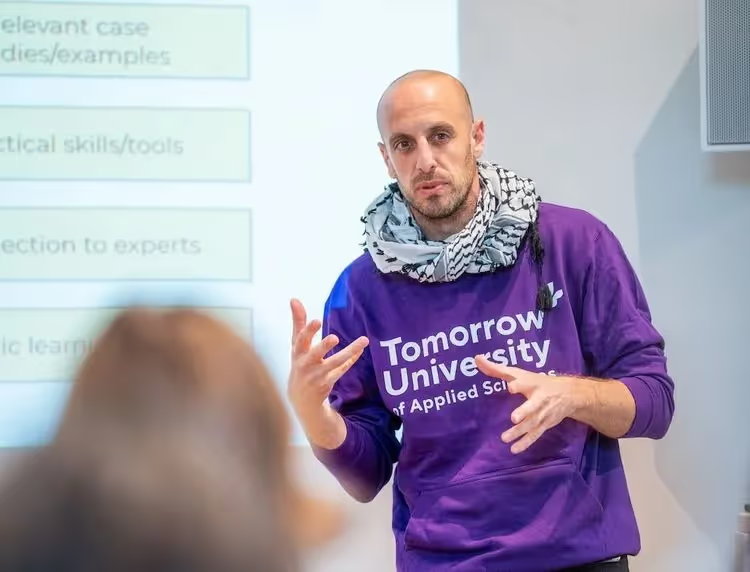
Teaching at Tomorrow University
Programs




Skills You Can Learn
Sustainability Education
Sustainable Land Management
Science-Based Decision-Making
Quantifying Biodiversity Responses
Ecological Conservation Strategies
Community-Based Conservation
Sustainable Resource Management
AI Applications in Conservation
Tropical Ecosystem Analysis
Habitat Restoration Techniques
Illegal Wildlife Trade Mitigation
Pharmaceutical Biodiversity Applications
Biodiversity Monitoring Techniques
Environmental Science Foundations
Anthropogenic Climate Change Analysis
Scientific Writing
Stakeholder Collaboration
Conservation Policy Development
Ethical Land Use Practices
Logging and Forestry Impact Analysis
