Andy George Kept Running Into the Same Wall
After 14 years running his own company, Andy George knew what he didn't want to do next. Finding out what he did want started with an email in the mountains of Slovenia, and ran straight into a challenge he still has a love-hate relationship with.
Table of Contents
Fourteen years, then six months
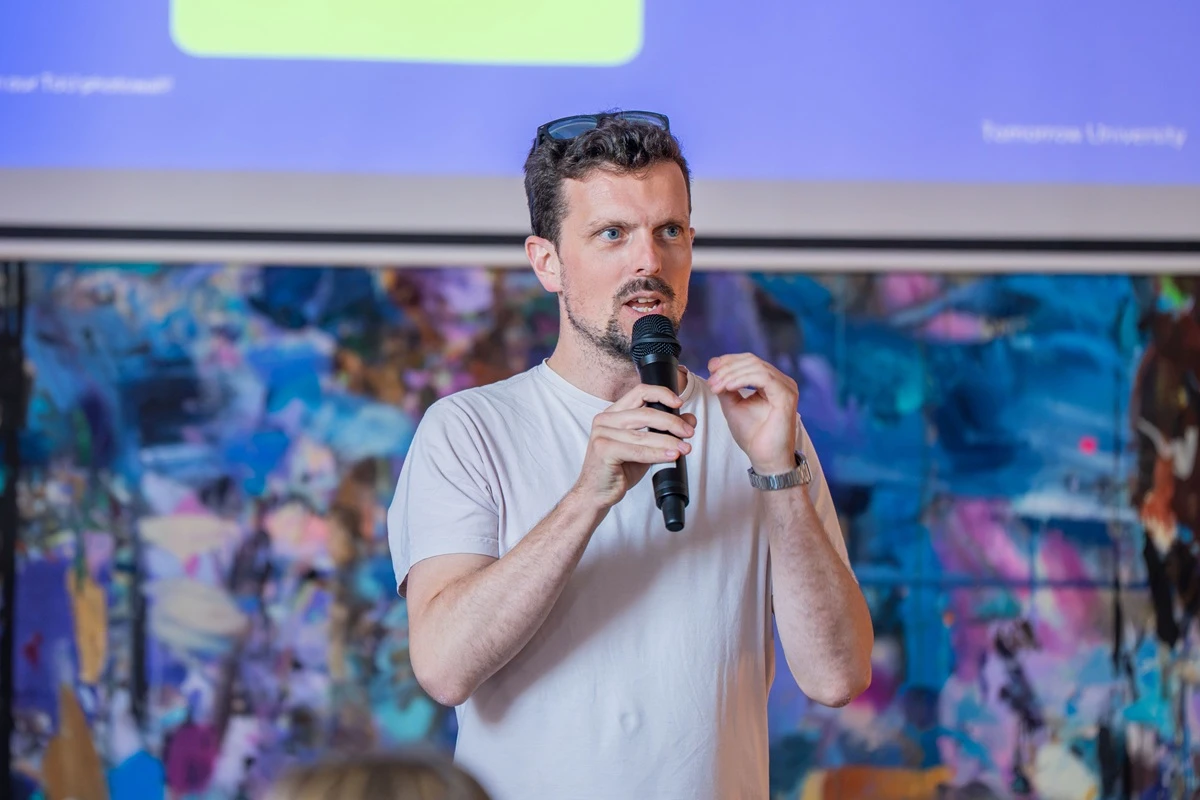
In 2024 Andy George left the company he had founded and run for 14 years. "It was something I had put a lot of myself into," he says. His daughter was born the same year. He gave himself six months to be a dad and to work out what came next, without rushing into anything.
He and his partner share the caring equally. Without a job, his days were open, "almost too flexible sometimes." After about 15 years in London they let go of their flat, too, and began, in his words, "living more in motion."
He knew he didn't want to go back to his old industry. He couldn't say which one he'd move into instead, or what he'd do there. "I had this real desire that I wanted to do something good in the world." For that, he wanted to add new skills and knowledge to his experience. An MBA had been on his mind for years, but the ones he looked at were expensive or felt dated.
The six months were nearly up, and the answer still hadn't come. "I still don't know what it is I want to do," he remembers thinking.
An email in the mountains
The family had taken some time to travel and was driving around central Europe in a camper van. One night, in the mountains of Slovenia, he got an email from a job site he'd signed up to. It carried an article about choosing where to live based on things like happiness rankings.
It hit two things he was already thinking about. He had written his undergraduate thesis on wellbeing economics in the arts, and the family was trying to work out where to live next. He wanted to know who was behind the article and "kept following the breadcrumbs" until he found us. Our Impact MBA put sustainability, leadership and technology into one program, all of them things he wanted to learn about.
It was late, so he slept on it. Two days later he told his partner he thought he wanted to do it. He needed her on board, because his study time would mean more of the caring fell to her. They gave it a few more days, and he used them to make sure it wasn't a scam or "something that I would regret." A few weeks later he was enrolled, and in November 2024 he started our Impact MBA in Cohort 6.
Part of him thought it was too good to be true, he says. "I'm glad I didn't listen to that part of my brain."
Two worries going in
His biggest concern was that we're remote first. He'd heard from founders who had done MBAs that the value is all in the network. He couldn't picture how that would work at a distance. He committed anyway. He didn't want to be the reason he missed out on those connections, so the worry pushed him to get involved. With no job to go to, he threw himself into workshops and events, especially the ones learners ran for each other.
Behind it all sat another worry, "that kind of existential 'I don't know what the hell I'm doing,'" and with it "lacking a bit of self-esteem, lacking a bit of confidence."
Every answer pointed back
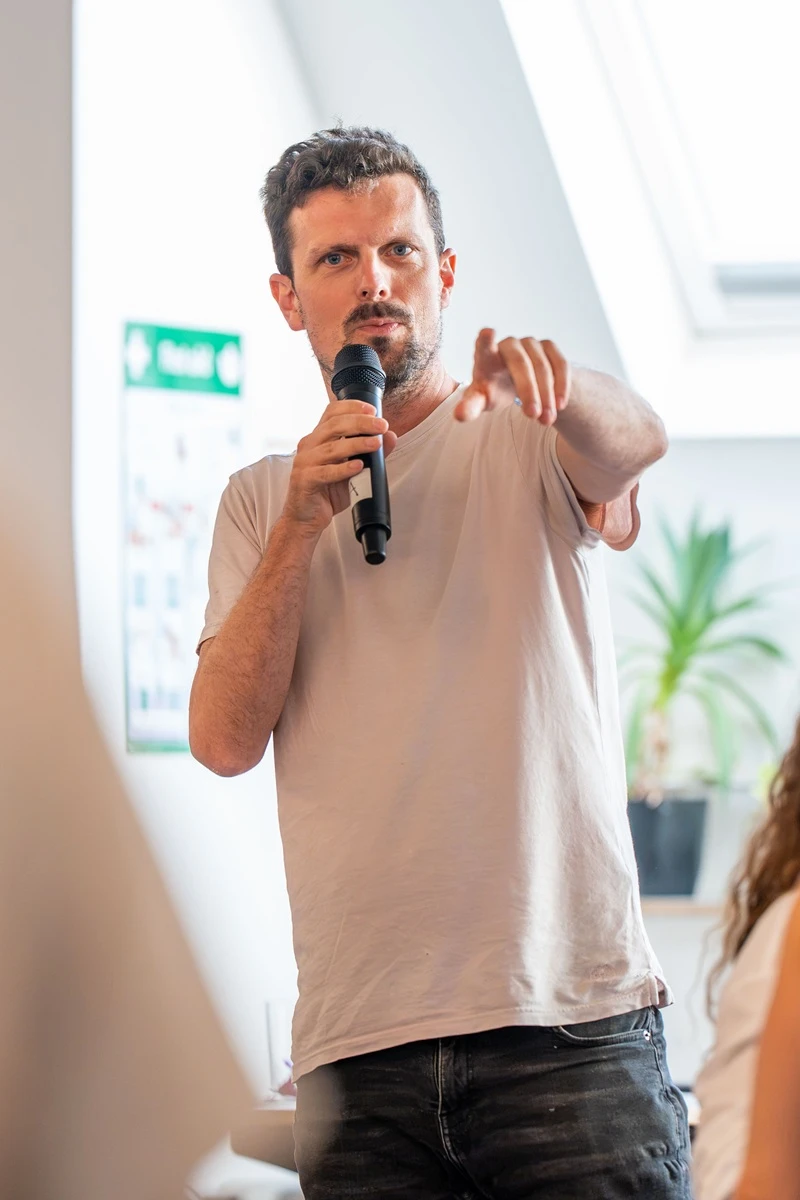
Mission Identification, the challenge where learners work out what they want their work to serve, was where he got stuck. "I hated Mission Identification," he says. He also calls it a great course, and he's sent friends to do it. Every answer he found pointed back to what he'd done before. "I'm really good at doing this thing that I've been doing for 14 years, but I don't want to do that anymore."
"I felt like I was repeatedly running against the same wall, trying to find a way through it." He didn't get all the way through in that challenge. But he made a dent, and over the following months he broke through. Today he can say what his mission is. "My mission is around building people's sense of agency, the belief that they can make a difference in the world, but also building feeling like they belong in the spaces that they exist in."
The thesis was hard in a different way. The challenges before it had come with more guidance, and this one started with a blank page. He describes it as a wrestle with his own data. "Sometimes it felt like we were dancing. Sometimes it felt like we were fighting." Because he knew it would be a solo project, he set up an accountability group with four other learners, to talk the work through out loud.
More about himself than his skills
He had come for skills and a direction. What surprised him most was how personal the work became. Part of that came from other learners, in the workshops they ran for each other. Early in his studies he joined one on system change run by Jess Blijkers, and it was the start of a close friendship. Around the same time he started the Next Chapter Collective, which meets once a month for people in our community who are going through a transition in work or life.
"I was expecting it to be an academic course that I take, I get some skills and I move on. I wasn't expecting the transformation of my soul in the process of it."
CommonGrnd
Today Andy is in the early stages of starting a company around that mission, CommonGrnd. In September 2026 he started running his first program.
The ideas grew out of conversations during his studies, he says, and two questions run through them: "what stops people from actually taking action on things they care about," and "how do we turn this kind of inner change into outer action?" He's also building on parts of his time with us, like learning in small cohorts and having conversations that go beyond small talk.
He still runs the Next Chapter Collective and leads our Action Hub for London and the UK.
Curiosity is one of his core values, and his own line for it is "Let curiosity be my fiercest driver." "If you let your curiosity lead through your studies or through your life, you will always discover more about yourself," he says. "Putting aside competition, putting aside being the best. You can still be the best, but it's about letting curiosity drive you forward."
Asked how he notices the change day to day, he paused before answering. Then he explained the pause. "I think Andy two years ago would have answered straight away with, 'I know this.' The confidence or the bravado, maybe the pretense that I have all the answers. And actually where I am now is from a place of curiosity. So when you ask that question, I'm pausing and I'm thinking."
Start turning your passion into action. Take your Program Finder Quiz.