Antonia Zoe Reiter: "It's in My Own Hands"
Antonia Zoe Reiter studied part of her master's from Indonesia, Japan and Thailand, with challenge calls at 1 a.m. In this interview she talks about how she still made friends who are around to this day, and what she'd tell someone facing the same decision now.
Table of Contents
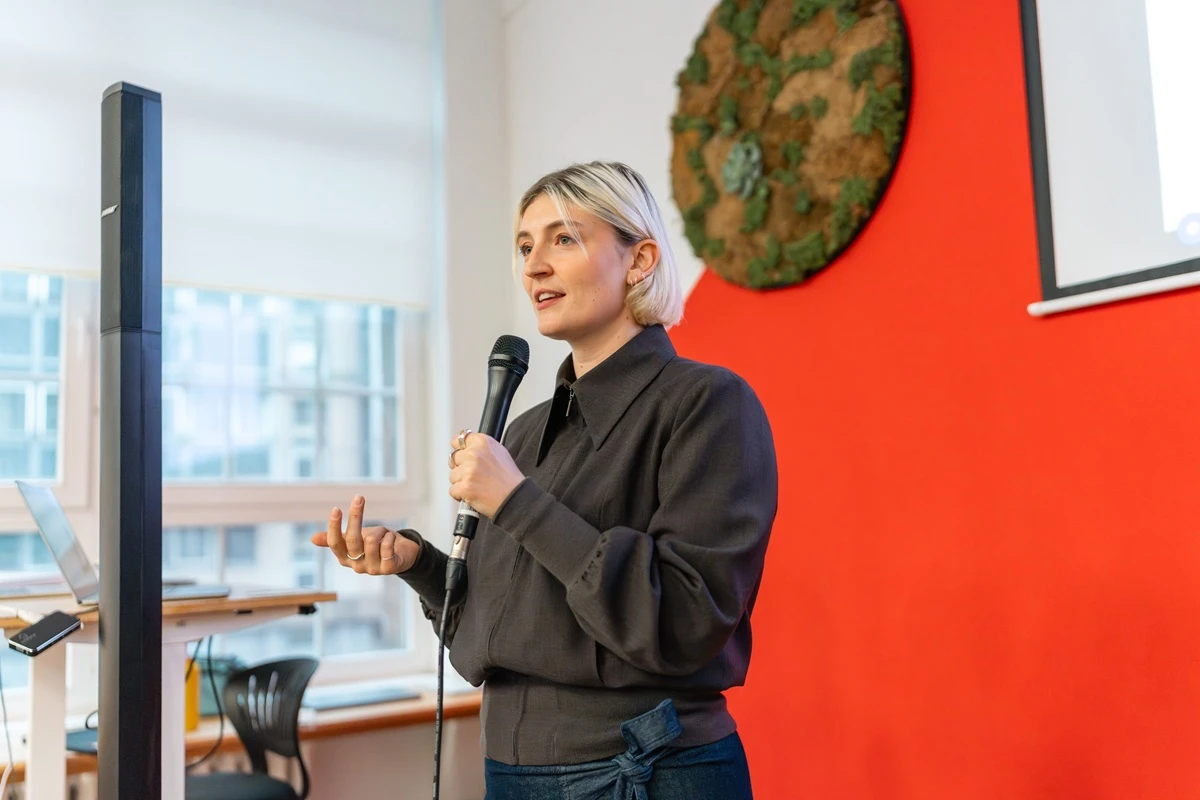
Antonia Zoe Reiter was working full time in retail management at an omnichannel retailer in Vienna. In late 2023 she started our MSc in Sustainability, Entrepreneurship & Technology, then run in cooperation with WU Executive Academy. She finished in September 2025 and founded NOWNI in early 2026. Today she is an Entrepreneurship Ambassador and mentors other learners.
You liked your job. Why a master's anyway?
I really liked working there, mostly because of my colleagues. In my old job I got to support some projects in sustainability, and at some point it became clear that I wanted to train in that area. It wasn't because I didn't like the job. I just wanted something new in terms of content. For a long time, I don't think I even knew which program I really wanted. I think it's often the case that you stress yourself out because you feel like: why aren't you making a decision? But often that's simply because you don't know yet what you want.
How did you end up with us?
Simple internet research. Sustainability and flexibility were the most important things for me. I just googled, and with all kinds of different searches I kept landing on Tomorrow University. I found that combination of sustainability, entrepreneurship and technology amazing, and I thought remote first was cool. The Challenge-Based Learning model [learning through concrete, real-world tasks] also stood out to me in a good way. From my bachelor's I still knew those exam periods where afterwards you ask yourself: what did I actually learn?
You studied part of the program from Asia. How did that go?
I had a lot of challenge calls at midnight or at 1 a.m., and I also gave presentations when it was already pitch dark. But I was very glad I could study full time, so the late calls weren't a problem and I could organize my time freely.
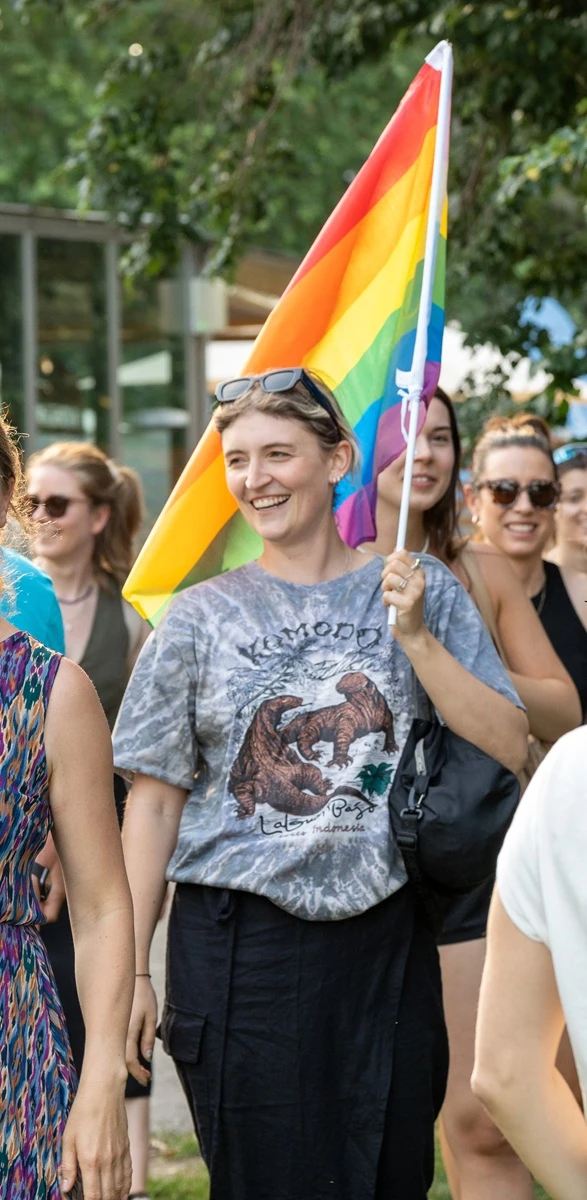
How do you find your footing when nobody shares a room with you?
I was curious about that, of course, because a lot of great friendships came out of my bachelor's, really important ones. I thought about it, but at the same time I was open, and I told myself: things will turn out the way they turn out, and it's in my own hands. So I tried to be very active and set up one-on-one calls with other learners myself right away, on top of the challenge calls. And that actually worked quite well. That's a tip I still give other learners today: take it into your own hands, reach out to people from your cohort or other cohorts, and build your network. That was really important for my whole time studying. In my cohort, and I can't really compare, we stuck together really well. Once there were, I think, even 11 or 12 of us from the cohort at a meetup.
What carried you through the hard stretches?
My thesis was very challenging, of course. But I always had it in my head that I'm doing this for no one but myself, and that means I had no one to blame when it annoyed me or when it got hard. I paid for it myself, I chose it myself. That was always a simple reminder: well, this was your own decision. It's a privilege to be able to do this, and if you choose it yourself, then it really is the most important motivation.
Did you plan to start a company?
No, that's not the thought I went into the program with. It really only came about along the way, out of the combination of people, the setup, time to reflect and understanding what motivates me without pressure. That doesn't depend only on the university, it depends on a lot of other things too, but it was definitely a good environment to test it. When I lose motivation, I can always remind myself: I'm the one shaping my life. That's definitely a change, something I don't think I had before, or only very, very rarely. Especially when you start something yourself, I think it's really important to work on a topic that gives you a lot of energy, even if the big revenue numbers don't come in right away. I work on how empathy can be actively trained in schools and in companies. There still aren't many tangible tools and methods to really integrate and train it in everyday work.
Who is still around from back then?
I still have calls every month with Jan, my study buddy from the cohort. Sometimes a month goes by, but it's actually pretty regular. We're friends and we exchange ideas. Evelyn from my cohort also started a company and is in Vienna too, and she and I and others from the cohort who are in Vienna have met once a month since we finished. We support each other, feedback, but friendships also simply grew out of it. At the graduation in Vienna it was great to see so many people from my cohort. We'd said we really wanted to meet in Vienna, so some of us graduated in Vienna instead of Berlin.
What would you tell someone facing that kind of decision today?
If you notice that the situation you're in, or your job, has moved far away from your own values, I wouldn't push that aside for too long. I'd just think it through: do I want change because something really doesn't fit my values, or do I want change because I feel some kind of pressure from outside? Because I want a title, or because I feel I'm behind, I'm too slow. Those are reasons too, of course. But I think motivation stays higher when you do it because you notice: the situation I'm in maybe fulfills me in some parts, but not in others. And then to look more closely at the parts that aren't fulfilled and make decisions that help fill them. It's not an easy tip. But that's what I'd say.
The interview was conducted in German and has been translated, condensed and edited.
Find your path and your people. Take your Program Finder Quiz.