.svg)
.svg)

Personal Statement Examples That Feel Specific and Real
Table of Contents
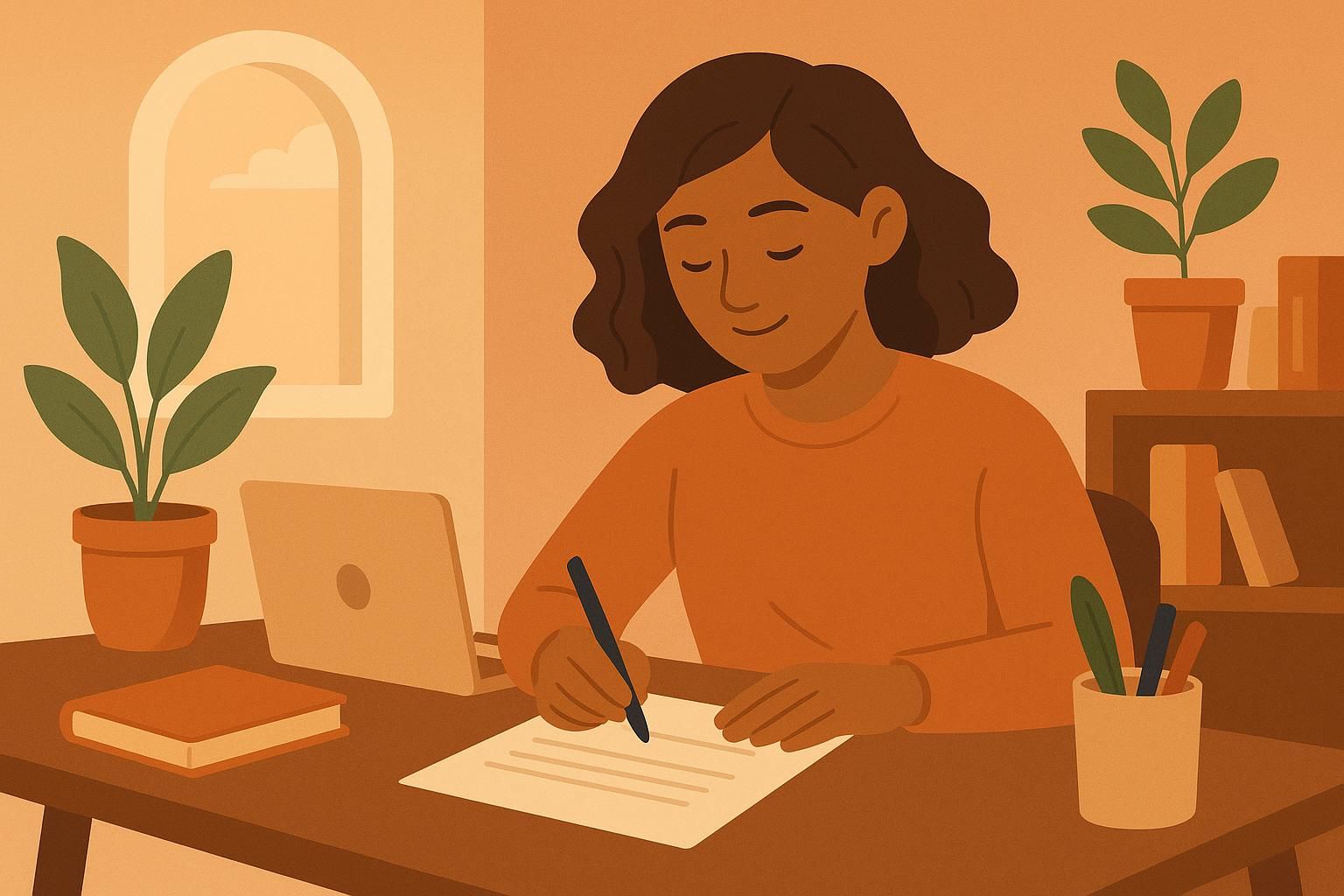
Reading someone else's personal statement while your own document sits empty is a strange, specific kind of pressure. Most examples floating around online do not help much, because they read like performances more than people. A personal statement example is only useful when it shows one honestly examined moment, told in a voice that actually sounds like a person. Keep that in mind before you start.
Specificity can be learned, and it starts small. Pick the one true detail you still recall clearly, a conversation, a number, a moment you got something wrong, and follow it somewhere honest. That is the same instinct behind writing a strong admission letter: the story convinces the reader, and the adjectives piled around it rarely add much.
What Actually Makes a Personal Statement Example Worth Studying
A strong example pulls off a few things at once, and none of them need an unusual life. It stays with one moment or thread rather than squeezing a whole biography into five hundred words, which keeps the writer in control of the piece from start to finish so you never have to guess where it's going. It also reflects, going beyond what happened to say what the writer actually learned, and it connects clearly to the program itself, using details a reader couldn't paste into any other application.
A Career Changer's Opening: What One Real Detail Does
Picture a logistics manager in their early thirties, applying to a purpose-driven graduate program after several years in supply chain operations. Their opening might look like this:
"I spent four years optimizing delivery routes to shave minutes off shipping times, and I was good at it. Then one Tuesday, a supplier email mentioned that a route change I had approved had added forty minutes to a driver's day, every day, for three months, because it cut through a residential area with no truck access after dark. Nobody had asked the driver. I had not asked the driver. That gap pulled me toward sustainable operations. I built a small pilot that cut return-shipment waste by eighteen percent, rerouting damaged goods through a local repair partner. It worked, and it showed me how much I still have to learn about designing systems that account for people from the start."
Plenty of applicants have a sustainability angle. This one works because the writer stays inside a single Tuesday and one email, letting them carry the weight of four years. The reflection lands in one honest sentence near the end, admitting what the writer still doesn't know, and the pilot, with its real number, does more to prove program fit than any line about wanting to make an impact ever could. Building something small and testing it is also the instinct challenge-based learning programs are built around, so a closing line naming a program that swaps exams for real projects wouldn't feel forced here.
A Quieter Example: Why Rhythm Matters as Much as Content
A second example needs a completely different rhythm to feel just as real. Picture a recent graduate applying to an organizational psychology program, whose material is a quiet, ongoing observation from everyday work life.
"I started tracking something strange in my first job. In every team meeting, the same three people talked, and five others took notes and left without saying a word. I began asking the quiet ones afterward what they had wanted to say. Nine times out of ten, they had a sharper read on the problem than the room did. I don't have a full theory yet for why some rooms let people think out loud and others shut them down, but that gap has become the question underneath most of what I want to study next."
Notice how short the sentences run compared to the first example, and how little drama the writer reaches for. There's just a pattern noticed and taken seriously over time, which proves an earlier point: ordinary moments carry as much weight as major turning points when the reflection behind them is genuine. That closing question about why some rooms work also reads as a quiet values statement, the same pull behind wanting to study inside a real cohort, where people actually think out loud together. Two different rhythms, but the same standard underneath: one thread the writer stayed in control of, told honestly, tied to what the program actually offers.
How to Adapt an Example Without Borrowing Someone Else's Voice
Adapting an example well means borrowing the technique and applying it to a memory that's genuinely yours. Notice what a strong opening does: it starts mid-moment, uses a real number, holds off on the lesson until it's earned. Borrowing someone else's phrasing or specific detail, on the other hand, is where good intentions turn into a real problem, and a documented one.
In the UK, UCAS runs every submitted personal statement through similarity-detection software, and flagged cases have risen sharply: 7,300 statements were flagged for suspected plagiarism in 2023, more than double the number from two years earlier. Overly polished, generic writing raises exactly this suspicion, part of why UCAS moved undergraduate applicants toward three structured questions from 2026 entry, meant to make coached or AI-shaped answers harder to hide.
Before adapting anyone's example, sit with what you actually believe about your own reasons for applying, even the reasons that sound less impressive said out loud. That's slow, awkward work, the same kind involved in figuring out why you actually want any of this, but it's where the real material comes from, and no example online can do it for you.
The Weak Patterns Generic Examples Teach You to Repeat
Reading a lot of sample statements back to back installs habits that quietly weaken your own writing. The childhood-passion opener is the most common: "I have always been passionate about helping people" tells a reader nothing they can picture. A dictionary definition or borrowed quote does something similar, putting someone else's words at the front of a document meant to be about you.
Listing achievements with no reflection is another common one, a paragraph of activities and titles that reads like a resume with better formatting. Unexplained self-praise adjectives fall into the same category: calling yourself hardworking or unique proves little on its own, while the specific moment that made you act that way proves it without the label. Reaching for a hardship you wouldn't actually discuss with an interviewer face to face creates the opposite problem, oversharing that reads as performance. You're trying to connect with a reader, and generic templates make that easy to forget.
What "Good" Actually Sounds Like on the Page
What held both examples together was control. Each writer chose one thread, followed it honestly, and let a real detail carry weight a bigger claim usually tries to force. That holds up whether your material is a workplace mistake or a quiet pattern you've noticed and never written down before.
Before you submit anything, reread your draft looking for the thing that could only have happened to you, the exact moment with its real verb and actual number attached. If a stranger could swap in their own name and the paragraph would still make sense, that's the one to rebuild first. Good writing here comes down to keeping the one detail that's actually true and letting everything else support it.
Frequently Asked Questions
How long should a personal statement actually be?
Most graduate and MBA personal statements run between 500 and 1,000 words, though every program sets its own limit, so check that first. The UK's UCAS format keeps undergraduate statements to roughly 4,000 characters. Clarity matters more than hitting a maximum; a tight, specific 600 words beats a padded 950 every time.
Is a small, ordinary moment a strong enough topic for a personal statement?
Yes, and it often works better than a dramatic story would. Admissions readers generally respond more to how clearly you reflect on something small than to how impressive the event itself sounds. A quiet observation, handled with genuine self-awareness, does the same job a bigger story would.
What's the real difference between a personal statement and a statement of purpose?
The difference is scope. A personal statement leaves room for your background and character; a statement of purpose stays locked on your academic goals and why this specific program. Check the exact prompt before you draft anything, since some applications genuinely want both.
Can admissions readers tell if I used AI to write my personal statement?
By reading alone, not reliably. What matters more is that institutions like the UK's UCAS explicitly treat AI-generated text submitted as your own as a form of academic dishonesty, and applicants must confirm the words are genuinely theirs before submitting. Writing in your own voice from the start avoids the question entirely.
How many people should read my draft before I submit it?
A small number, two or three people whose take on your writing you already trust. London Business School's own admissions team advises MBA applicants to limit outside feedback for exactly this reason: too many editors gradually pull writing toward someone else's voice and away from the writer's own. Choose readers who know how you actually talk, then stop.
.svg)


.avif)