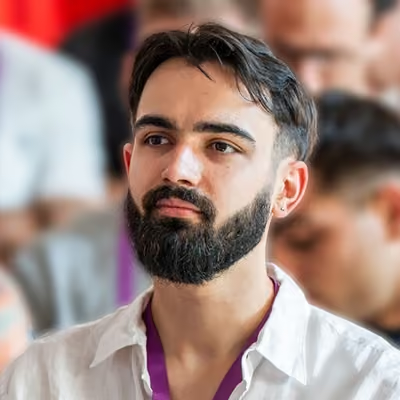
Thomas Keppler: "I Don't Always Need a Few Hundred People Behind Me to Do Good Things"
In his mid-50s, after more than two decades in leadership roles, Thomas Keppler couldn't let go of one question: What do I want to achieve with all my experience, and what contribution do I want to make? He decided to study again. As a result, he now combines new perspectives on leadership and sustainable transformation with his experience as a managing director, in his own strategy consultancy for companies and the people who run them.
Table of Contents
A project that raised questions
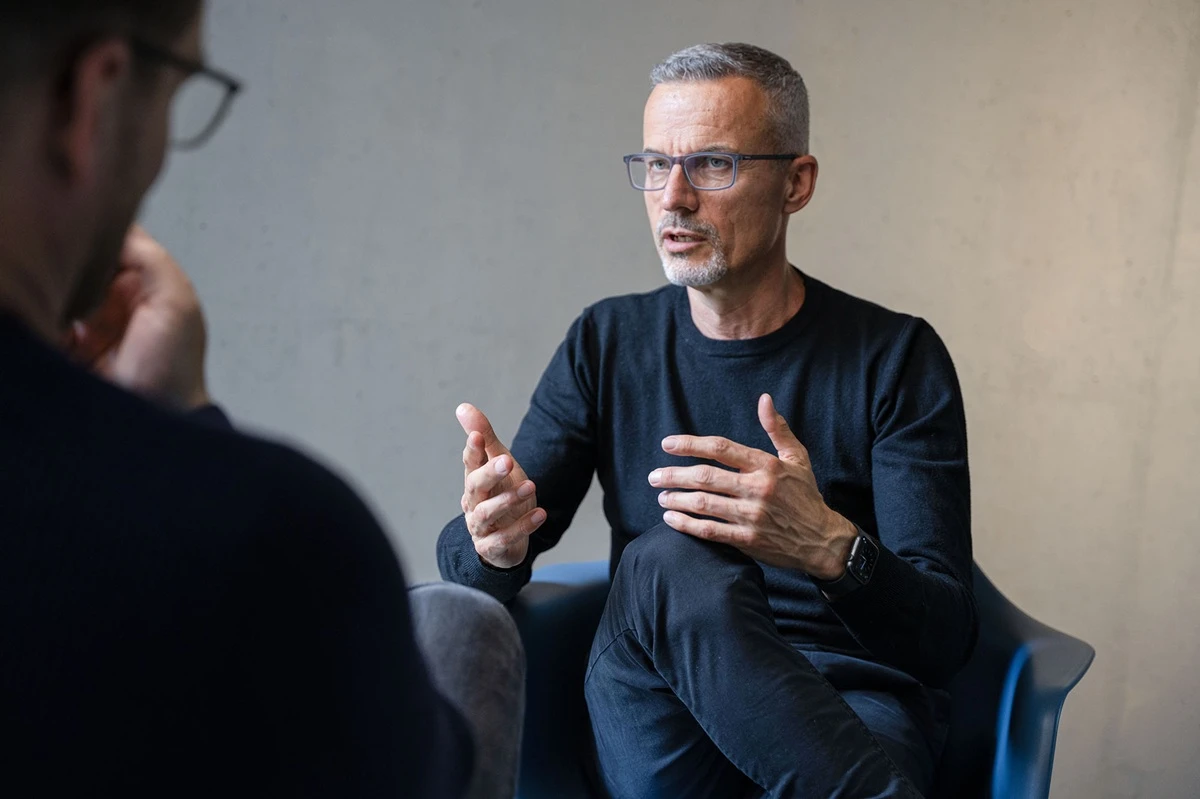
Thomas Keppler studied international business and spent about 20 years in the sporting goods industry, roughly half of them as managing director. At his first company he worked his way up from a student writing his thesis there to running the business. Later he took on leadership roles in Zurich, then at a medical technology company and finally at a home and living company in southwestern Germany.
There, from 2021 on, he kept asking how companies could be commercially successful and still use resources more responsibly. Keppler didn't want to leave it at a discussion. He launched a product line built on cradle-to-cradle principles and drove it with conviction. For about a year and a half, his team worked with suppliers in Asia and Europe to keep materials in the loop as far as possible. They didn't fully reach the ambitious circular-economy goal. To him, the product line still made a statement in the industry and set something in motion.
He was convinced they were heading in the right direction. At the same time, he saw the resistance inside his own company. The developers raised objections, and sales said: "Nobody needs it, no customer wants it, and it's too expensive." The different views stayed with him long after the project. Why do people looking at the same development see such different opportunities and risks? And what finally gets entrepreneurs to act?
He wanted to get to the bottom of these questions. "I don't want to stay on the surface. I want to understand it," he says. Going back to study someday had long been a small dream of his. Now that wish had a concrete subject.
A weekend with his son
In spring 2023 he spent a weekend mountain biking with his son. They talked a lot, but in between they just rode, and on the bike the old dream of studying took concrete shape. He had always been "a seriously curious guy."
"Now it's suddenly there. A year ago, or two, it wasn't there. Now it's there."
That evening, over a beer, he told his son, a student himself, who was a little surprised. "And then he says: Yeah, why not, actually?" And: "Hey, if you think it's cool, go!"
After many years at the top of a company, he would be a learner again. A few weeks later he knew he wanted to step down as managing director at the end of the year and focus on a master's degree. He wasn't done with his work. He wanted to understand more.
What drew him to us was the combination of sustainability, entrepreneurship and technology. When he talked to Thomas Funke, one of our co-founders, he asked openly how he would feel as an experienced managing director among much younger learners. Funke told him that wasn't an issue at all. And that's how it turned out.
Rethinking leadership
In November 2023 he started our MSc in Sustainability, Entrepreneurship & Technology, at the time run in cooperation with WU Executive Academy. His international cohort brought together people from very different professional backgrounds, from startups to systems architecture to sustainability. Many were 15 to 20 years younger than him.
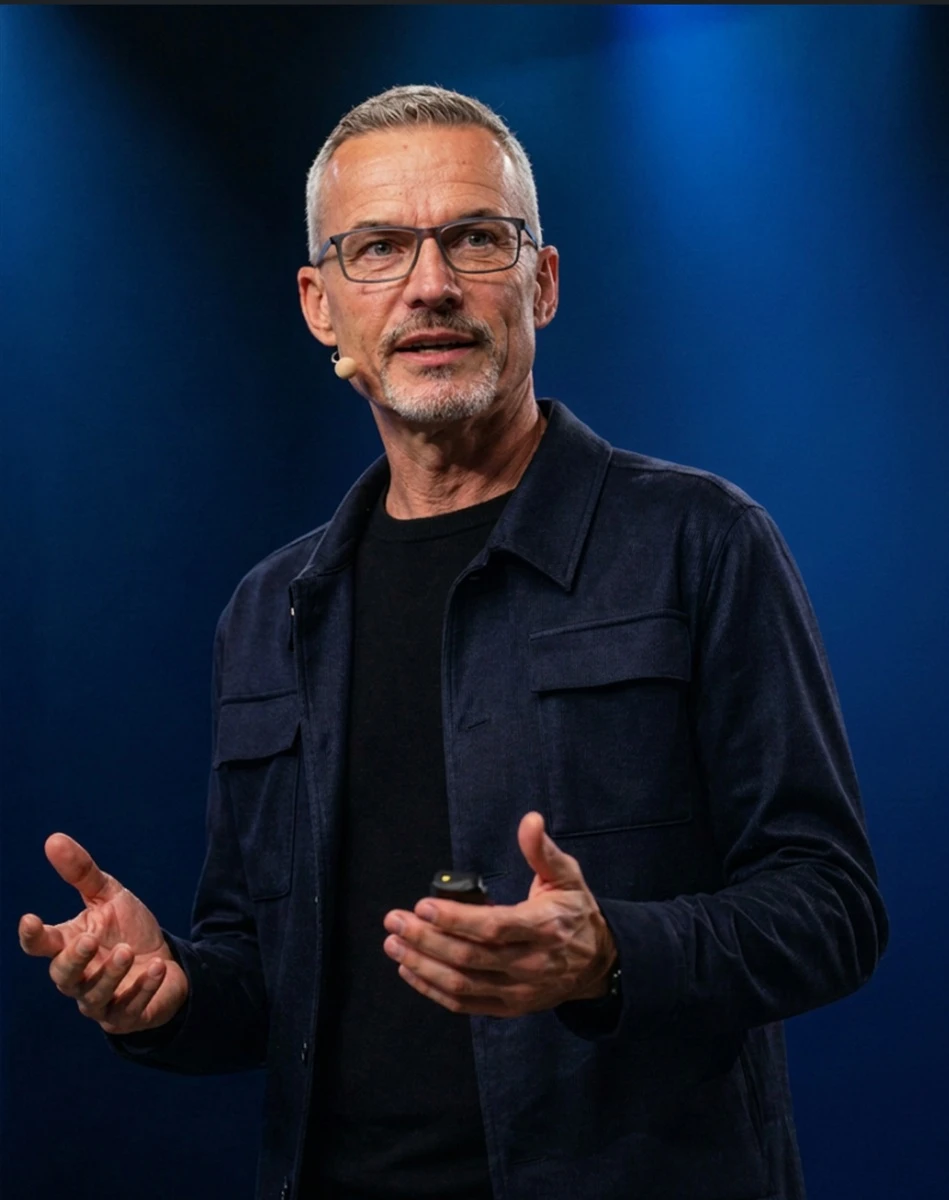
Mission Identification, the challenge that opens the program, already had him asking questions that day-to-day leadership rarely leaves time for. What really drives me? What contribution do I want to make from here on? The group work was new to him, and rewarding. After many years in leadership roles, he was used to giving direction and making decisions. "That executive habit has an ugly side, too […] in the sense that you sort of stop really listening to everyone that closely. You form an opinion very quickly," he says of a habit that can develop in positions of responsibility. In his experience, a managing director often brings a lot of dominance into discussions without meaning to, and others adjust to it. In his studies he wanted to make more room for other perspectives, on purpose. That didn't call his earlier leadership into question. He learned to use his experience in a different context. Today that helps him as a consultant, too: first understand, then ask the right questions together, and only then make decisions.
Every other Friday
It didn't stop at learning. It did him good to zoom out of his bubble a little, "out of that executive, manager bubble." In the cohort he could talk with highly motivated people about what they were doing in their studies, "but also what moves each of us, what life is. Seriously good."
The cohort stuck together, and many are still in touch as alumni. A small circle of three or four formed out of it, and he still has a coffee chat with them every other Friday. "Friendships actually came out of it, too," and they've lasted well beyond graduation.
From studies to research
His master's thesis grew out of the questions that had already occupied him as a managing director. In a study with entrepreneurs from European SMEs, he analyzed how personal values, clarity of purpose, behavioral styles, motivators and emotional intelligence relate to the decision to launch circular business models. From this he developed the Entrepreneur Coherence Index (ECoI) as an analytical approach.
In the eight cases he studied, there was a link between personal orientation and the decision to launch circular business models. External pressure and available resources alone didn't explain the differences.
"Nobody is waiting for Thomas Keppler"
He hadn't planned the next turn in his career. During his studies, people from his network who run companies approached him. Could he think along on a strategic question? First sparring conversations turned into real projects. Keppler noticed how much the work suited him: listening, seeing connections, structuring difficult decisions. In early 2025 he founded thomaskeppler consulting.
Today he works with entrepreneurs, managing directors and leadership teams in Germany and internationally on strategic direction, new business models and sustainable transformation. His focus areas are Entrepreneurial Transformation and Decision Architecture. Behind them is a question that already occupied him as a managing director: Why do some companies fail to act despite good ideas? So he works on strategies and with the people who own them and have to decide under uncertainty.
Going independent called for a new decision from him, too. "There are millions of consultants in this world. And nobody is waiting for Thomas Keppler," he says looking back, with a dose of self-irony. He also found he could put his experience to good use without a large organization behind him. "I don't always need a few hundred people behind me to do good things."
What would he tell someone who wants to learn or try something new after many years in their career? His advice is to give curiosity much more room "rather than saying: no, no, no, this person will think it's stupid, and then I'll have to explain it, and none of them will understand, so I'd better leave it." That holds "regardless of age, really regardless of age."
A leadership role shapes your own habits over the years, too, Keppler says. "Some people explain it away, they say, I'm still the same. That's just not true. It rubs off." His studies, he says, helped him look at other perspectives with a more open mind.
Find your path and your people. Take your Program Finder Quiz.